Born in Kesswil, Switzerland, Carl Gustav Jung was the son of Paul Achilles Jung, a pastor, and Emilie Preiswerk Jung. Raised in a family with strong religious ties – many relatives were clergy members – Jung was exposed to theological discussions and spiritual inquiries early on. This environment deeply impacted his future intellectual explorations.
As a child, Jung was introspective and often alone, experiencing vivid dreams. He cultivated a vibrant inner life through drawing, sculpting, and imaginative games. His studies revealed a strong interest in philosophy, history, and the study of diverse religions. A significant experience during his teenage years involved a powerful awareness of self, which he later called ‘Number One Personality,’ separate from his daily self. This event ignited his lifelong pursuit to unravel the intricacies of the human psyche.
Jung’s career took a significant turn when he began corresponding with Sigmund Freud in 1906. Initially, Freud saw Jung as a potential successor, a ‘crown prince’ to the psychoanalytic movement. Their collaboration was intense and productive, leading to significant advancements in understanding the unconscious mind. Jung embraced Freud’s theories, particularly those concerning dream analysis and the importance of early childhood experiences.
However, their relationship was not without its tensions. Jung’s expanding interests, particularly his exploration of mythology and symbolism, began to diverge from Freud’s more strictly sexual interpretation of the unconscious. These differences eventually led to a painful and irreconcilable break in 1913, marking a pivotal moment in the history of psychoanalysis.
Following the split with Freud, Jung embarked on a period of intense self-analysis and exploration. This period was crucial in the development of his own unique school of thought, which he termed ‘Analytical Psychology.’ He began to formulate concepts that distinguished his approach from Freudian psychoanalysis.
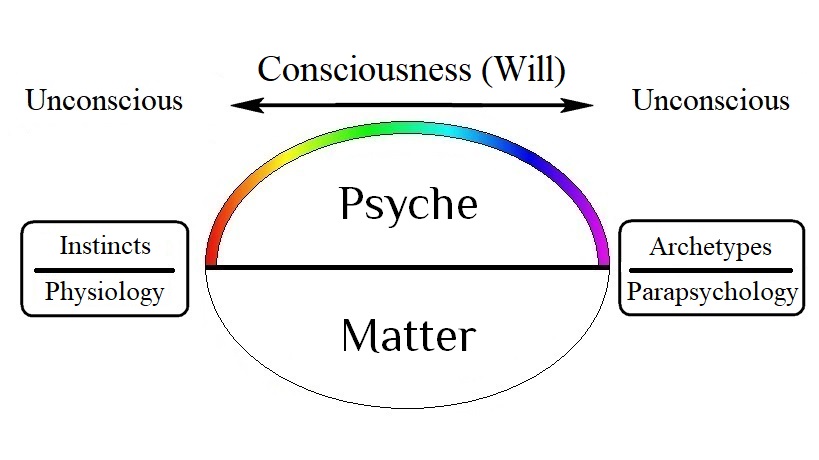
One of the key differences was Jung’s concept of the collective unconscious, a universal repository of ancestral memories and archetypes shared by all humanity. This contrasted with Freud’s focus on the personal unconscious, shaped by individual experiences. Jung also emphasized the importance of individuation, the lifelong process of integrating conscious and unconscious aspects of the personality to achieve wholeness.
The collective unconscious, perhaps Jung’s most famous contribution, is a universal and inherited aspect of the unconscious mind. It contains archetypes, which are universal, primordial images and patterns of behavior that reside in the collective unconscious. These archetypes manifest in myths, dreams, and symbols across cultures.
Examples of archetypes include the Mother, the Hero, the Shadow, and the Self. The Mother archetype represents nurturing and care, while the Hero embodies courage and the quest for self-discovery. The Shadow represents the repressed aspects of the personality, and the Self represents the totality of the individual, the integration of conscious and unconscious elements.
Jung also identified other important psychological constructs, including the Persona, Anima, and Animus. The Persona is the social mask we present to the world, the aspect of ourselves we consciously choose to display. The Anima is the unconscious feminine side of a man, while the Animus is the unconscious masculine side of a woman. These concepts highlight the importance of integrating both masculine and feminine qualities within the individual for psychological balance.
Individuation is the central concept in Jungian psychology, representing the lifelong process of psychological development. It involves becoming aware of and integrating the conscious and unconscious aspects of the personality. This process leads to a greater sense of wholeness, authenticity, and self-realization.
Individuation is not about achieving perfection but rather about accepting and integrating all aspects of the self, including the Shadow. It is a journey of self-discovery and transformation, leading to a more complete and fulfilling life.
Carl Jung’s influence extends far beyond the field of psychology. His ideas have profoundly impacted literature, art, religion, and popular culture. His concepts of archetypes, the collective unconscious, and individuation continue to resonate with individuals seeking meaning and purpose in their lives.
Jung’s work has also influenced various therapeutic approaches, including art therapy, sandplay therapy, and dream analysis. His emphasis on the importance of symbolism and the unconscious mind has enriched our understanding of the human experience and continues to inspire new generations of psychologists and therapists.
Despite his immense influence, Jung’s theories have also faced criticisms. Some critics argue that his concepts are too abstract and difficult to empirically validate. Others have questioned the universality of his archetypes, suggesting that they may be culturally specific.
However, Jung’s work remains highly relevant in contemporary society. His emphasis on the importance of self-awareness, meaning-making, and psychological integration resonates with individuals navigating the complexities of modern life. His insights into the human psyche continue to provide valuable tools for personal growth and transformation.
If you want a practical next step, you can also check out Heal your past, design your future.
If you want a practical next step, you can also check out Become an Ultimate Master of your life.
Not every ancient remedy survives contact with modern laboratory scrutiny. Ashwagandha is one of the…
Long before cortisol became a buzzword and wellness influencers flooded social media feeds, Ayurvedic physicians…
The most commanding person in the room often says the least — yet the moment…
The most effective leaders on the planet share one quality that no business school truly…
History's most effective leaders were not born with a gift — they were forged through…
At a Glance:The most durable careers are built on continuous learning, not just strong starting…



Leave a Comment