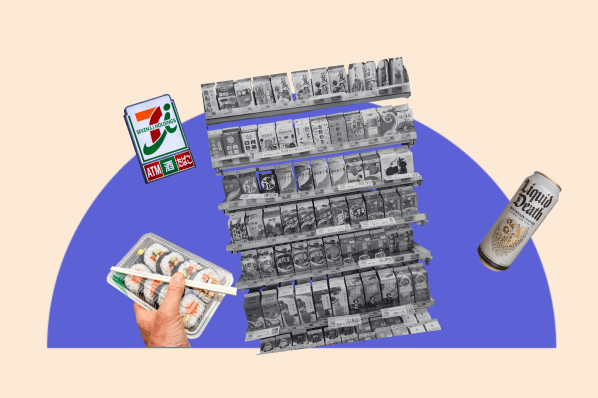
The story of 7-Eleven’s remarkable transformation in Japan offers a masterclass in global expansion done right. Despite being an American brand, 7-Eleven has become a beloved institution in Japan with twice as many stores, and 8x higher profit margins than in its home country.
The story of 7-Eleven’s remarkable transformation in Japan offers a masterclass in global expansion done right. Despite being an American brand, 7-Eleven has become a beloved institution in Japan with twice as many stores, and 8x higher profit margins than in its home country.
But not every brand’s international journey ends in success. When Liquid Death, the edgy water brand that conquered American social media, announced its retreat from the UK market, it joined the ranks of companies that couldn’t replicate their domestic success overseas.
What separates global winners from losers? According to behavioral science expert Phil Agnew, the contrast between these two stories reveals universal truths about global expansion that extend far beyond convenience stores and canned water.
Liquid Death’s UK exit wasn’t about poor marketing — it was about misunderstanding local market dynamics. Here’s why the edgy water brand struggled in Britain (read our full analysis here):
The Liquid Death story becomes even more instructive when compared with 7-Eleven—an American brand that achieved extraordinary success overseas, particularly in Japan.
Despite originating in the US, 7-Eleven has twice as many stores in Japan (21,500) as in America (9,224), despite Japan being much smaller in geography and population. Even more strikingly, 7-Eleven in Japan boasts an operating margin of 27% compared to an average of 3.5% in other countries.
How did an American convenience store chain become a beloved cultural institution abroad while struggling in its home country? The operational differences tell the story:
In 1979, 7-Eleven Japan created the Nihon Delica Foods Association (NDF), a conglomerate of food production companies dedicated to keeping meals fresh from factory to store. By 2024, they operated 172 factories around Japan, ensuring consistent quality across all locations.
This stands in stark contrast to American 7-Elevens, which rely on shared distribution centers that also supply Walmart, Taco Bell, KFC, and others—creating inconsistent quality and freshness.
7-Eleven Japan employs a management approach called “Tanpin Kanri”—constantly analyzing what customers are buying, what they’re not, what products to order more of, and what to discontinue. This item-by-item analysis creates a feedback loop that continuously improves product selection.
Perhaps the most profound difference isn’t just quality—it’s how deeply the brand integrates into local community life. In Japan, 7-Eleven functions as:
Japanese 7-Elevens position themselves as neighborhood hubs that people need to visit regularly, whereas American 7-Elevens are viewed as places you stop only when necessary and leave as quickly as possible.
For brands considering international expansion, here’s a comprehensive approach based on lessons from both stories:
The $47B takeover bid for 7-Eleven’s parent company by Canadian retail giant Couche-Tard suggests that solving these operational and market challenges, even in a seemingly simple business like a convenience store, can create massive value.
As both the Liquid Death and 7-Eleven stories demonstrate, success doesn’t just come from great marketing or a compelling product. It comes from understanding local contexts, adapting operations accordingly, and building systems that create lasting competitive advantages.
Long before pharmaceutical companies began bottling stress relief, healers across South Asia were grinding a…
Most people chasing AI literacy are solving the wrong problem — and that mistake could…
What if you could build a thriving social media channel without showing your face, spending…
The landscape of free AI voice generation has shifted dramatically — and those who haven't…
Ashwagandha is one of those rare botanical remedies that has survived millennia of scrutiny —…
While many traditional remedies have faded from relevance as modern medicine advanced, ashwagandha has taken…



Leave a Comment