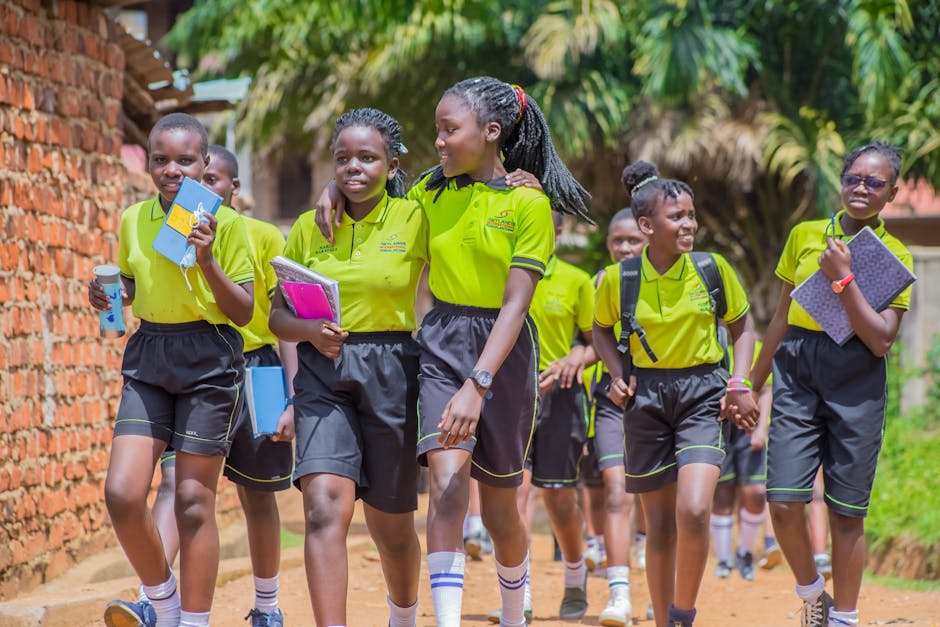
Uganda’s education system, a ladder stretching from primary school to university, presents both opportunities and challenges for its students. While good grades are important, there’s a growing push to nurture well-rounded individuals – critical thinkers, creative problem-solvers, and skilled individuals ready to contribute meaningfully to society. This means moving beyond memorization to embrace adaptability, innovation, and resilience.
The Primary Leaving Examination (PLE) is a key stepping stone in a Ugandan student’s academic journey. Mathematics can often feel like a hurdle. To truly succeed in PLE math, students should aim to understand the ‘why’ behind the formulas, not just the ‘how’. This involves consistent practice, breaking down complex problems, and seeking clarification whenever something isn’t clear. Think of it like building a house: you need a strong foundation of understanding before you can construct anything elaborate. For example, understanding the concept of fractions is crucial before tackling more advanced topics like ratios and proportions.
Effective strategies for PLE mathematics include:
The Uganda Certificate of Education (UCE) is another significant milestone. Chemistry is often seen as a particularly demanding subject. To excel in UCE Chemistry, students need a solid grasp of fundamental principles, hands-on laboratory experience, and strong problem-solving abilities. Focus on understanding the periodic table, chemical bonding, and stoichiometry – these are the building blocks of chemistry. For instance, understanding how atoms bond together is fundamental to understanding chemical reactions.
Effective strategies for UCE Chemistry success include:
While performing well on UNEB exams is important, remember that education is about more than just grades. It’s about developing into a well-rounded individual with strong social, emotional, and physical well-being – a responsible and engaged citizen ready to contribute to your community.
Participating in extracurricular activities, such as sports, clubs, and community service, provides invaluable opportunities to develop leadership skills, teamwork abilities, and a sense of social responsibility. These activities can also foster creativity, boost self-confidence, and promote a healthy lifestyle. Think of extracurriculars as opportunities to explore your passions and develop skills that you can’t learn in the classroom.
Uganda’s education system should prioritize the development of critical thinking and problem-solving skills. Students need to be able to analyze information, evaluate arguments, and develop solutions to complex problems. This requires a move away from rote memorization and towards more interactive, inquiry-based teaching methods. Encourage students to ask ‘why’ and challenge assumptions.
Many resources are available to support you on your educational journey. Take advantage of them!
By utilizing these resources effectively and embracing a holistic approach to education, you can unlock your full potential, achieve UNEB success, and develop into a well-rounded individual ready to make a positive impact on your community and the nation.
If you want a practical next step, you can also check out Heal your past, design your future.
If you want a practical next step, you can also check out Become an Ultimate Master of your life.
Uganda's Bold Leap into the Digital Age Imagine a classroom where textbooks are supplemented by…
Uganda Plugs Into the Digital Age: A Classroom Revolution Imagine Ugandan students learning about the…
Uganda's Education Transformation: From Pandemic Response to Long-Term Vision The COVID-19 pandemic presented unprecedented challenges…
The Nuances of Opinion: Rethinking Book Reviews We often think of book reviews as definitive…
Beyond the Basics: Mastering the Book Review In the sprawling world of literature, book reviews…
The Art of Book Reviewing: More Than Just a Summary Book reviews serve as vital…


Leave a Comment