Full Name: Carl Gustav Jung
Life Span: 1875 – 1961
Origin: Swiss
Key Disciplines: Psychiatry, Psychology, Analytical Psychology
Global Impact: Carl Jung, a pioneering psychiatrist, established analytical psychology. He delved into the human psyche, originating concepts such as the collective unconscious, archetypes, and psychological types. Jung’s theories have had a significant impact on diverse fields including psychology, philosophy, religion, literature, and popular culture on a global scale.
Born in Kesswil, Switzerland, on July 26, 1875, Carl Jung’s upbringing was deeply rooted in intellectual and religious heritage. His father, Paul Achilles Jung, served as a pastor, while his mother, Emilie Preiswerk Jung, came from a lineage of theologians and academics. This blend of spiritual and intellectual influences played a crucial role in shaping Jung’s early fascination with both scientific inquiry and the enigmatic aspects of the human experience.
Jung’s childhood was characterized by periods of solitude and a vibrant inner world. He documented and later scrutinized his intense dreams and visions, leading him to recognize the profound influence of an unconscious realm on human behavior and awareness.
Initially, he considered a career in philology or history, but eventually chose medicine, specializing in psychiatry. This decision allowed him to explore his deep interest in the human mind while applying scientific methods to understand its complexities.
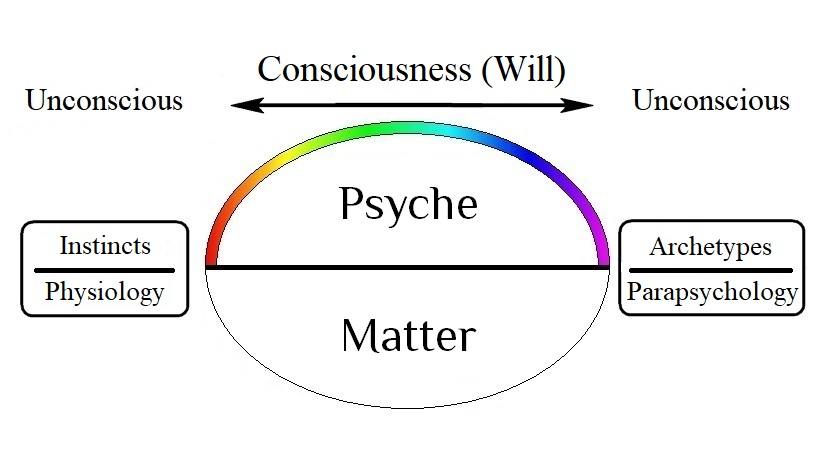
One of Jung’s most revolutionary ideas is the concept of the collective unconscious. Unlike the personal unconscious, which contains an individual’s repressed memories and experiences, the collective unconscious is a universal reservoir of ancestral memories and archetypes shared by all humanity. These archetypes are inherited predispositions to experience and respond to the world in certain ways. Examples include the Mother, the Hero, and the Shadow.
Archetypes are universal, primordial images, patterns, and symbols that reside within the collective unconscious. They represent fundamental aspects of human experience and are expressed through myths, dreams, and art. Jung identified numerous archetypes, each with its own unique characteristics and symbolic meaning. The study of archetypes provides valuable insights into human behavior and motivation.
Jung developed a theory of psychological types based on two attitudes (introversion and extraversion) and four functions (thinking, feeling, sensation, and intuition). These combinations result in eight distinct psychological types, each with its own characteristic strengths and weaknesses. Understanding psychological types can help individuals gain self-awareness and improve their relationships with others.
Jung’s model contrasts with other personality theories by emphasizing the inherent value of all types and the importance of developing all functions for psychological wholeness.
Carl Jung’s influence extends far beyond the field of psychology. His ideas have shaped our understanding of mythology, religion, art, and literature. His concept of the collective unconscious has resonated with artists, writers, and filmmakers, inspiring countless works of creative expression. Jungian psychology continues to be a vibrant and influential force in contemporary culture, offering valuable insights into the human condition and the search for meaning and purpose.
Jungian analysis, a form of depth psychology, aims to help individuals achieve psychological wholeness and self-realization. Through dream analysis, active imagination, and exploration of the unconscious, individuals can gain a deeper understanding of themselves and their place in the world. Jungian analysts work collaboratively with their clients to uncover the hidden patterns and symbols that shape their lives.
The process often involves exploring recurring themes in dreams, examining personal mythology, and engaging with the archetypal images that emerge from the unconscious.
Despite his significant contributions, Jung’s work has also faced criticism. Some critics argue that his theories are too abstract and difficult to test empirically. Others have questioned his interpretations of historical and mythological figures. Despite these criticisms, Jung’s ideas continue to stimulate debate and inspire new avenues of inquiry.
If you want a practical next step, you can also check out Heal your past, design your future.
If you want a practical next step, you can also check out Become an Ultimate Master of your life.
While pharmaceutical companies invest billions developing synthetic antivirals, a humble wild shrub has been delivering…
Hidden along fence lines, riverbanks, and the forgotten edges of parks and woodland paths grows…
Most people treat Sunday evening as their productivity launchpad — a time to map out…
Long before pharmaceutical companies existed, healers across Asia were already prescribing a bright orange root…
Long before pharmaceutical laboratories existed, traditional healers across Asia were prescribing a bright yellow root…
The Rise of No-Cost AI Voice GenerationA quiet revolution has taken place in audio production.…



Leave a Comment