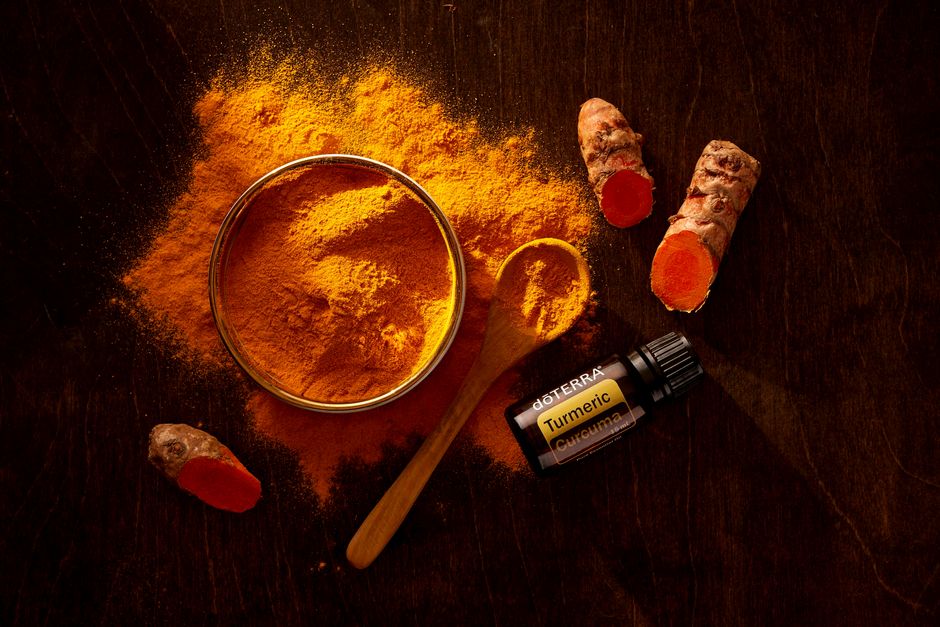
Long before pharmaceutical companies began synthesizing anti-inflammatory drugs, healers across Asia were grinding a humble root into a vibrant yellow powder. That root was turmeric, and modern science is now catching up to what traditional medicine figured out millennia ago.
Turmeric grows as a flowering perennial in the warm, humid climates of South and Southeast Asia. Botanically classified within the ginger family Zingiberaceae, the plant produces an underground stem called a rhizome, which is harvested, sun-dried, and ground into the distinctive amber-colored powder found in kitchens and pharmacies alike. The plant itself can grow to about one meter tall, with broad leaves and subtle pale blooms that give little hint of the potent chemistry hidden beneath the soil.
India remains the undisputed center of turmeric cultivation, responsible for approximately 78 percent of global production. The southern states of Andhra Pradesh and Tamil Nadu are particularly significant growing regions. Ayurvedic practitioners have documented turmeric’s medicinal use for more than 4,000 years, employing it to treat everything from festering wounds to sluggish liver function. Traditional Chinese Medicine adopted it for similar purposes, particularly valuing its capacity to improve circulation and relieve pain. The rhizome contains several bioactive compounds, but it is the curcuminoid family — led by curcumin — that has drawn the most sustained scientific attention.
What makes curcumin scientifically extraordinary is not any single action but rather the sheer number of biological pathways it engages simultaneously. Most pharmaceutical drugs are designed to hit one precise molecular target. Curcumin, by contrast, has been shown to influence more than 100 distinct molecular targets, functioning more like a biological conductor than a single instrument.
At the cellular level, curcumin suppresses a regulatory protein complex known as nuclear factor kappa B, or NF-kB, which acts as a master switch for inflammatory responses throughout the body. When NF-kB activity runs unchecked — as it does in many chronic conditions — sustained inflammation quietly damages tissues and organs over time. Researchers now recognize this low-grade chronic inflammation as a common thread linking cardiovascular disease, type 2 diabetes, Alzheimer’s disease, and several cancers. By interrupting this signaling cascade, curcumin addresses a root mechanism rather than merely masking symptoms.
Curcumin also operates as a dual-action antioxidant. It directly neutralizes harmful free radicals responsible for oxidative cellular damage while simultaneously activating the body’s own internal antioxidant enzyme systems. This second layer of protection distinguishes it from simpler antioxidants that only perform the first function.
Curcumin’s greatest weakness is its poor absorption. Consumed in isolation, it is metabolized and cleared from the bloodstream so rapidly that meaningful therapeutic concentrations are difficult to achieve. Researchers discovered that piperine, the compound giving black pepper its characteristic heat, can inhibit the metabolic enzymes responsible for this rapid breakdown. The result is a documented 2,000 percent increase in curcumin bioavailability when the two compounds are taken together. This explains why traditional Indian cooking, which routinely combines turmeric and black pepper in the same dishes, may have inadvertently optimized curcumin absorption long before biochemists understood why.
Because curcumin is fat-soluble rather than water-soluble, pairing turmeric with healthy fats such as olive oil, avocado, or coconut milk further supports absorption. Modern supplement manufacturers have developed additional delivery technologies including phospholipid complexes and nanoparticle formulations designed to address this bioavailability challenge for people taking concentrated curcumin doses.
The volume and consistency of research supporting turmeric’s benefits across multiple health domains is difficult to dismiss. The following areas represent some of the strongest documented evidence.
Consider a person in their sixties managing osteoarthritis in their knees. Standard treatment often involves long-term NSAID use, which carries risks including gastrointestinal bleeding and kidney strain. Multiple randomized controlled trials have placed curcumin supplementation head-to-head against ibuprofen in exactly this population. Several studies found the two approaches produced comparable reductions in pain scores and improvements in physical function, while curcumin produced significantly fewer adverse effects. Participants in these trials typically reported less morning stiffness, reduced joint swelling, and improved range of motion after four to twelve weeks of consistent supplementation. For rheumatoid arthritis patients, curcumin’s capacity to suppress cytokine activity — the inflammatory signaling molecules central to autoimmune joint destruction — offers an additional layer of relevance.
Taking the next step becomes straightforward when you have the right support — Become an Ultimate Master of your life is worth exploring.
Taking the next step becomes straightforward when you have the right support — Heal your past, design your future is worth exploring.
Relatively few compounds can cross the blood-brain barrier, the selective membrane protecting the brain from substances circulating in the bloodstream. Curcumin is among those that can, which opens a direct therapeutic pathway to brain tissue. Once there, it appears to elevate levels of brain-derived neurotrophic factor, a protein essential for neuron survival, growth, and the formation of new neural connections. Declining BDNF levels are consistently associated with depression, accelerated cognitive aging, and Alzheimer’s disease progression.
In one notable clinical trial, healthy adults over 50 who took a bioavailable curcumin supplement daily for 18 months showed measurable improvements in memory recall and sustained attention compared to a placebo group. Brain imaging conducted as part of the study also revealed reduced accumulation of amyloid plaques and tau tangles — the two hallmark structural abnormalities of Alzheimer’s disease. Separate research has found curcumin comparable to certain antidepressant medications in reducing depressive symptoms, likely through its combined effects on BDNF, serotonin, and dopamine signaling.
Heart health depends heavily on the integrity of the endothelium, the cellular lining of blood vessels that regulates blood pressure, clotting, and inflammatory responses. Endothelial dysfunction is considered an early warning sign of cardiovascular disease. Curcumin has demonstrated the ability to improve endothelial function through mechanisms that partially overlap with those of exercise and certain medications. One study comparing curcumin supplementation to aerobic exercise training in postmenopausal women found both interventions produced similar improvements in endothelial function markers over a 12-week period.
Curcumin also reduces LDL cholesterol oxidation, a process that contributes to arterial plaque formation, while simultaneously showing mild blood pressure-lowering effects. Its anti-inflammatory properties further protect arterial walls from the chronic damage that precedes most heart attacks and strokes.
Turmeric has a long traditional history as a digestive remedy, and contemporary research is validating this application. Curcumin stimulates bile production in the gallbladder, which supports fat digestion and reduces bloating. Clinical studies in patients with inflammatory bowel conditions including Crohn’s disease and ulcerative colitis have found curcumin supplementation capable of reducing disease activity scores and extending periods of remission when used alongside conventional treatment. Emerging research into the gut microbiome suggests curcumin may also selectively support beneficial bacterial populations while inhibiting harmful strains, though this area of investigation is still developing.
Laboratory and animal studies have consistently shown curcumin capable of inhibiting tumor cell proliferation, triggering programmed cancer cell death, and blocking the formation of new blood vessels that tumors require to grow. Human clinical trials remain in earlier stages, but results have been promising in colorectal cancer prevention, where curcumin appears particularly active given its direct contact with colon tissue during digestion. Researchers are investigating curcumin both as a standalone preventive agent and as a complement to conventional chemotherapy, where it may enhance drug effectiveness while reducing treatment-related side effects.
Incorporating turmeric into a daily routine does not require dramatic lifestyle changes. The following approaches range from culinary to therapeutic.
The simplest entry point is the kitchen. Turmeric integrates naturally into soups, stews, rice dishes, roasted vegetables, and egg preparations. A practical habit is adding a half teaspoon of turmeric along with a generous crack of black pepper to any savory dish during cooking. The pepper is not just seasoning — it is functionally improving curcumin absorption. Combining turmeric with a fat-containing ingredient such as olive oil or coconut milk further optimizes this effect.
A warm drink combining turmeric, black pepper, ginger, cinnamon, and a plant-based or dairy milk has become popular as an evening wellness ritual. Sweetened lightly with honey, this preparation delivers a meaningful dose of curcumin in a form that also supports relaxation. Turmeric can similarly be steeped as a tea using fresh grated rhizome or dried powder, though absorption remains enhanced when consumed with fat and pepper.
For individuals seeking more consistent therapeutic doses, standardized curcumin supplements offer a reliable option. Quality products should specify their curcumin content, ideally between 500 and 1,000 milligrams per serving, and should include either piperine or an alternative bioavailability-enhancing technology. Supplements labeled as containing BCM-95, Meriva, or Theracurmin have undergone specific bioavailability testing and tend to be among the better-studied formulations available.
A paste made from turmeric powder mixed with water, honey, or a carrier oil can be applied directly to skin affected by acne, minor wounds, eczema, or hyperpigmentation. Curcumin’s antibacterial and anti-inflammatory properties make it effective in this context, though users should be aware that turmeric will temporarily stain skin and clothing yellow.
Turmeric is safe for the vast majority of people when consumed in culinary quantities. At supplemental doses, a small number of individuals report mild gastrointestinal discomfort, particularly when starting at higher doses. More significant considerations apply to specific groups.
People taking anticoagulant medications such as warfarin or aspirin should be aware that curcumin has mild blood-thinning properties that could amplify drug effects. Those with gallstones or bile duct obstruction should avoid therapeutic doses, as curcumin’s bile-stimulating action can trigger discomfort or complications. Pregnant women are generally advised to limit turmeric to normal food quantities rather than supplement doses. Anyone managing a chronic health condition or taking prescription medications should discuss turmeric supplementation with their healthcare provider before beginning.
Turmeric occupies an unusual position in the landscape of natural health: it is ancient enough to carry thousands of years of empirical validation yet modern enough to be the subject of cutting-edge molecular research. The evidence supporting curcumin’s anti-inflammatory, neuroprotective, cardiovascular, and digestive benefits has reached a level of consistency that is difficult to attribute to coincidence. While turmeric is not a replacement for medical treatment in serious conditions, its capacity to support whole-body health through multiple simultaneous mechanisms makes it one of the most compelling functional foods available. The gap between the spice rack and the medicine cabinet, it turns out, may be smaller than most people assume.
Most software reviews happen once, under the best possible conditions, with a reviewer who is…
Long before pharmaceutical laboratories existed, healers across Asia were grinding a vivid yellow root into…
Hidden in plain sight on most kitchen shelves, turmeric is one of those rare ingredients…
History's greatest leaders never waited until they felt fully prepared. They stepped forward, adjusted course,…
While many herbal remedies have faded into obscurity, one small dark berry has maintained its…
A Berry With Deep Roots in Human HistoryElderberry, known scientifically as Sambucus nigra, has been…



Leave a Comment