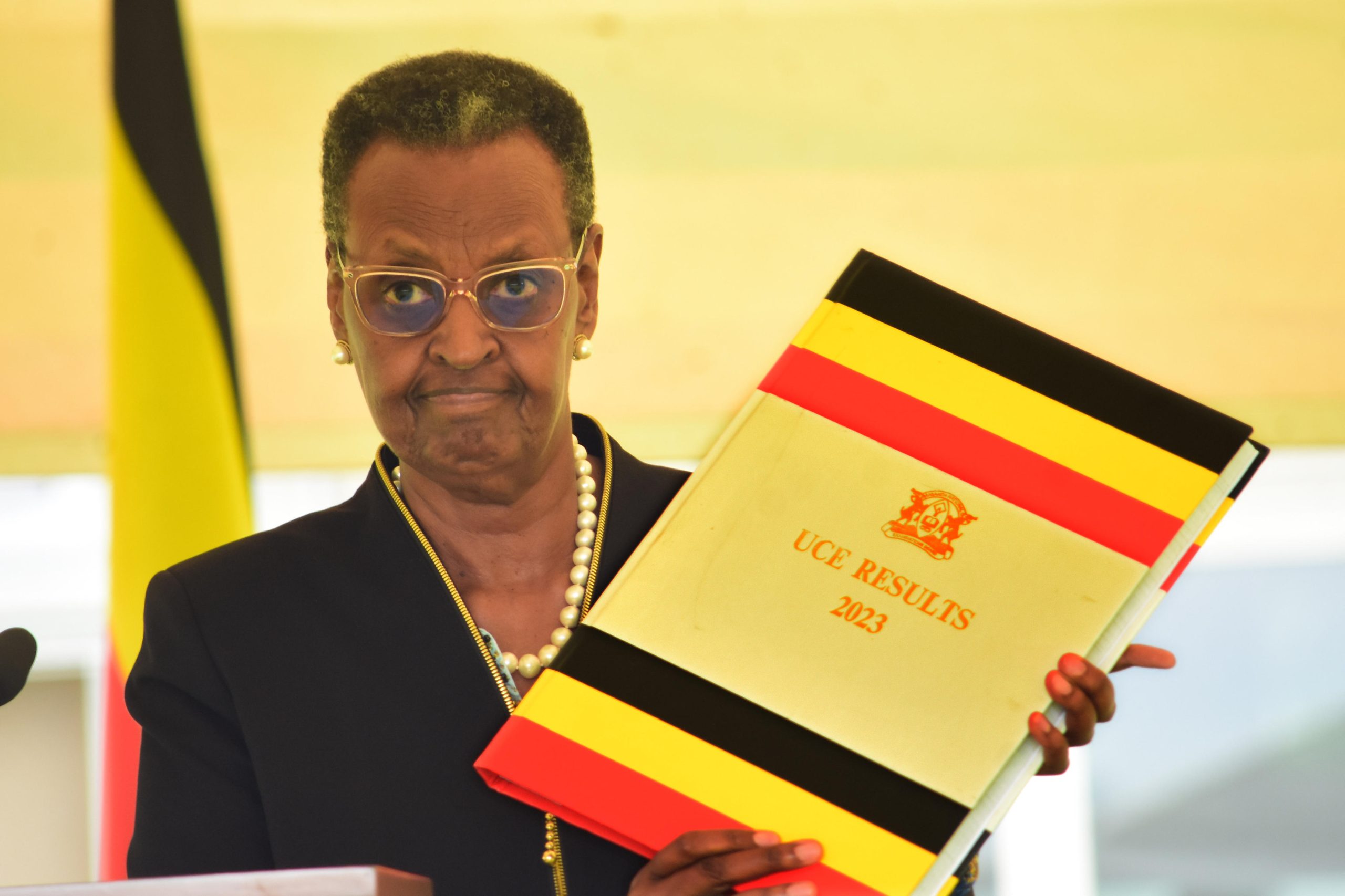
The Uganda National Examinations Board (UNEB) has released sample papers for the Uganda Certificate of Education -UCE end-of-cycle competency-based Assessment under the new lower secondary school curriculum. Students and teachers have eagerly awaited details about the examination structure, including the number of papers per subject and section.
Now, Jennifer Kalule Musamba, the UNEB spokesperson has confirmed that the sample papers are available, and they will distribute them to schools to familiarize both teachers and students with the format of Competency Based Assessment (CBA) questions.
Kalule further mentioned that the sample papers are now accessible through the UNEB portal for all UNEB Examination Centres. She added that the board will soon distribute hard-copy booklets to ensure that even schools without Centre Numbers are not excluded.
She further noted that UNEB calls upon teachers to familiarise themselves with the sample papers to guide the learners and come up with similar or related scenarios and questions to expose the learners to a variety of test items.
During a recent meeting where UNEB convened with top management from the Ministry of Education and other stakeholders on the same matter, Dan Odongo, the UNEB Executive Director, reiterated that the purpose of the sample materials is to guide schools on the new assessment formats for Competency Based Assessment.
“With these tools, schools will now be comforted, and know how the assessment will go. The sample papers are however just dummies of what is likely to come in the end-cycle Assessment. The final scenarios will certainly be different,” Odongo said.
Last year, the examination board carried out a study on the different sample papers that had been developed for the assessment by distributing them to students from selected schools nationwide.
However, teachers interviewed by our reporter from some of the schools where students sat for these papers noted that UNEB officials never showed them the items. But, later on, several selected teachers were also consulted.
Available information indicates that UNEB has prepared sample papers for 36 subjects across the categories of Humanities, Sciences, Vocational, and Languages.
As of the time of publishing this story, our reporter had not yet received copies of the aforementioned sample questions to analyze the nature and structure of the paper and the questions contained therein.
In addition to the sample papers, UNEB will soon be distributing Continuous Assessment data collection tools to schools. These tools will enable schools to assess learners regularly and report their marks to UNEB. These marks will later be compiled and contribute to 20 percent of the learners’ final marks at the end of O’Level.
Mike Nangosya Masikye, the Director of Examinations at UNEB, recently noted that the board has recognized that more competencies in the new curriculum can be effectively assessed through continuous assessment, including life skills generic skills essential for the 21st Century including Communication, Problem-Solving, Decision-Making, Collaboration, and Critical Thinking Skills, among others. These areas were neglected in the old curriculum.
Masikye stated that Continuous Based Assessment provides an opportunity to evaluate Masikye added that even the cognitive domain will be adequately assessed at the End of the Cycle.
Uganda's Bold Leap into the Digital Age Imagine a classroom where textbooks are supplemented by…
Uganda Plugs Into the Digital Age: A Classroom Revolution Imagine Ugandan students learning about the…
Uganda's Education Transformation: From Pandemic Response to Long-Term Vision The COVID-19 pandemic presented unprecedented challenges…
The Nuances of Opinion: Rethinking Book Reviews We often think of book reviews as definitive…
Beyond the Basics: Mastering the Book Review In the sprawling world of literature, book reviews…
The Art of Book Reviewing: More Than Just a Summary Book reviews serve as vital…

Leave a Comment