Full Name: Carl Gustav Jung
Lifespan: July 26, 1875 – June 6, 1961
Nationality: Swiss
Core Discipline: Psychiatry, Analytical Psychology
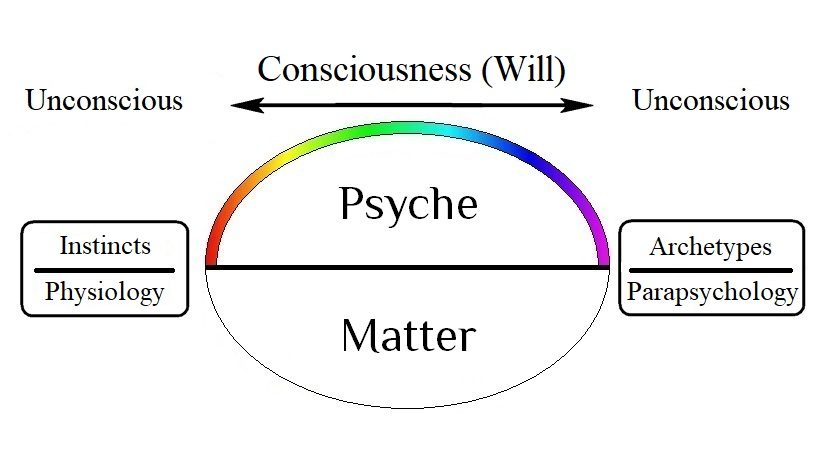
Global Significance: Carl Jung, a groundbreaking Swiss psychiatrist and the architect of analytical psychology, left an indelible mark on diverse fields beyond medicine. His profound insights into the human psyche have resonated within philosophy, anthropology, archaeology, literature, and religious studies. Concepts such as the collective unconscious, archetypes, and the process of individuation, popularized by Jung, continue to shape contemporary thought and permeate popular culture.
Born in Kesswil, Switzerland, Carl Jung was the son of Paul Achilles Jung, a pastor, and Emilie Preiswerk Jung. His upbringing was deeply rooted in religious and intellectual heritage, with a lineage boasting numerous clergymen and scholars. Jung’s formative years were characterized by a solitary nature and a vibrant inner world, rich with dreams and imaginative experiences.
Jung pursued medicine in Basel. Though initially intrigued by archaeology and philosophy, his fascination with the human psyche and the enigmas of the unconscious ultimately steered him toward psychiatry. His early professional life was significantly influenced by his tenure at the Burghölzli Mental Hospital in Zurich, where he worked under the guidance of Eugen Bleuler, a pioneering figure in schizophrenia research.
A transformative period in Jung’s intellectual journey was his association with Sigmund Freud. Initially a devoted follower, Jung became a key figure in the burgeoning psychoanalytic movement. Their collaboration was intense and productive, marked by a prolific exchange of ideas and a shared ambition to unlock the secrets of the unconscious mind. However, fundamental differences in their theoretical orientations eventually led to a profound and consequential split.
The schism between Jung and Freud stemmed from contrasting views on the nature of the libido and the unconscious. Freud viewed the libido primarily as a sexual drive, while Jung conceived of it as a more generalized psychic energy. Furthermore, Jung posited the existence of a collective unconscious, a universal reservoir of ancestral memories and archetypes shared by all humanity, a concept Freud rejected.
This divergence culminated in Jung’s development of analytical psychology, a distinct school of thought that emphasized the importance of individuation, the process of becoming a whole and integrated self. Analytical psychology also placed significant emphasis on the interpretation of dreams, the exploration of mythology and symbolism, and the recognition of the shadow self, the unconscious aspect of the personality that embodies repressed or disowned qualities.
Throughout his later life, Jung continued to refine and expand his theories, delving deeper into the realms of alchemy, mythology, and religious symbolism. He traveled extensively, studying diverse cultures and seeking to understand the universal patterns underlying human experience. His prolific writings, including “Psychological Types,” “The Archetypes and the Collective Unconscious,” and “Memories, Dreams, Reflections,” have been translated into numerous languages and continue to inspire readers worldwide.
Carl Jung’s impact extends far beyond the field of psychology. His ideas have permeated literature, art, film, and popular culture, shaping our understanding of the human psyche and the search for meaning and purpose in life. His work remains a vital source of insight and inspiration for those seeking to understand themselves and the world around them.
| Title | Year | Description |
|---|---|---|
| Psychological Types | 1921 | Explores different personality types based on attitudes (introversion and extraversion) and functions (thinking, feeling, sensation, and intuition). |
| The Archetypes and the Collective Unconscious | 1968 (compiled essays) | Details Jung’s theory of archetypes, universal patterns and images residing in the collective unconscious. |
| Memories, Dreams, Reflections | 1962 | Jung’s autobiography, providing insights into his life, personal development, and the evolution of his psychological theories. |
If you want a practical next step, you can also check out Heal your past, design your future.
If you want a practical next step, you can also check out Become an Ultimate Master of your life.
Uganda's Bold Leap into the Digital Age Imagine a classroom where textbooks are supplemented by…
Uganda Plugs Into the Digital Age: A Classroom Revolution Imagine Ugandan students learning about the…
Uganda's Education Transformation: From Pandemic Response to Long-Term Vision The COVID-19 pandemic presented unprecedented challenges…
The Nuances of Opinion: Rethinking Book Reviews We often think of book reviews as definitive…
Beyond the Basics: Mastering the Book Review In the sprawling world of literature, book reviews…
The Art of Book Reviewing: More Than Just a Summary Book reviews serve as vital…



Leave a Comment