Born in 1875 in the Swiss village of Kesswil, Carl Jung’s early life was deeply influenced by his family. His father served as a pastor, while his mother’s lineage was rich in spiritual heritage. This environment fostered a sense of introspection within Jung, sparking a lifelong curiosity about the inner workings of the mind. He was captivated by vivid dreams and visions, which he later came to understand as messages from the unconscious realm.
Jung pursued his passion for understanding the human mind by studying medicine at the University of Basel, ultimately specializing in psychiatry. He found inspiration in the work of Eugen Bleuler, a prominent psychiatrist known for defining “schizophrenia.” In 1900, Jung began his career at the Burghölzli psychiatric hospital in Zurich, where he conducted pioneering research on word association and the psychology of the unconscious.
A significant turning point in Jung’s intellectual journey was his introduction to Sigmund Freud.
The meeting between Jung and Sigmund Freud in 1907 marked the beginning of a profound and complex relationship. Initially, Freud saw Jung as his intellectual heir, a successor who could carry on the torch of psychoanalysis. Jung became the first president of the International Psychoanalytic Association, solidifying his position within the Freudian circle.
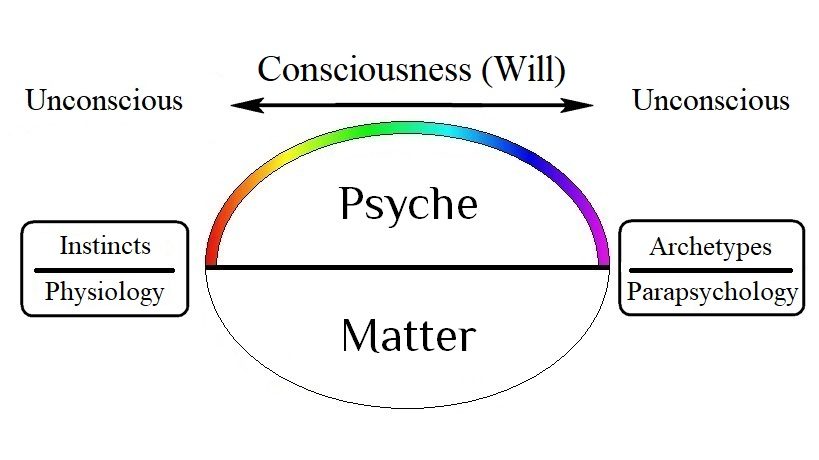
However, their collaboration was not destined to last. Fundamental differences in their theoretical approaches gradually emerged. Jung’s concept of the unconscious differed significantly from Freud’s. While Freud emphasized the personal unconscious, driven by repressed desires and experiences, Jung proposed the existence of a collective unconscious, a universal reservoir of archetypes and primordial images shared by all humanity.
These diverging views ultimately led to a painful and irreconcilable split in 1913, marking a pivotal moment in the history of psychology. Jung went on to develop his own unique school of thought, known as analytical psychology.
Following his break with Freud, Jung embarked on a period of intense self-reflection and exploration of the unconscious. This period, often referred to as his “confrontation with the unconscious,” was a time of profound personal and intellectual transformation. He meticulously documented his dreams, visions, and active imaginations, seeking to understand the symbolic language of the unconscious.
From this exploration, Jung developed key concepts that formed the foundation of analytical psychology. These include:
Carl Jung’s influence extends far beyond the realm of psychology. His ideas have resonated across various disciplines, shaping our understanding of religion, literature, art, and culture. His work has inspired countless individuals to embark on their own journeys of self-discovery and personal growth.
Jung’s emphasis on the importance of dreams, symbols, and the unconscious has enriched our understanding of the human psyche. His concept of individuation offers a powerful framework for personal transformation, encouraging individuals to embrace their wholeness and live more authentically.
Despite the complexities of his theories, Jung’s work continues to offer valuable insights into the human condition, reminding us of the profound depths of the unconscious and the potential for personal and collective transformation.
If you want a practical next step, you can also check out Heal your past, design your future.
If you want a practical next step, you can also check out Become an Ultimate Master of your life.
Long before pharmaceutical companies began synthesizing anti-inflammatory drugs, healers across Asia were grinding a humble…
Long before clinical trials and peer-reviewed journals existed, healers across South Asia were grinding turmeric…
You are not lazy. You are not careless. You may simply be a victim of…
Most people assume that the path to a better life runs through more effort, more…
Biology is often misunderstood as a subject that rewards only memorisation. In reality, Uganda Certificate…
Chemistry sits at the intersection of memory, logic, and practical skill — yet thousands of…



Leave a Comment