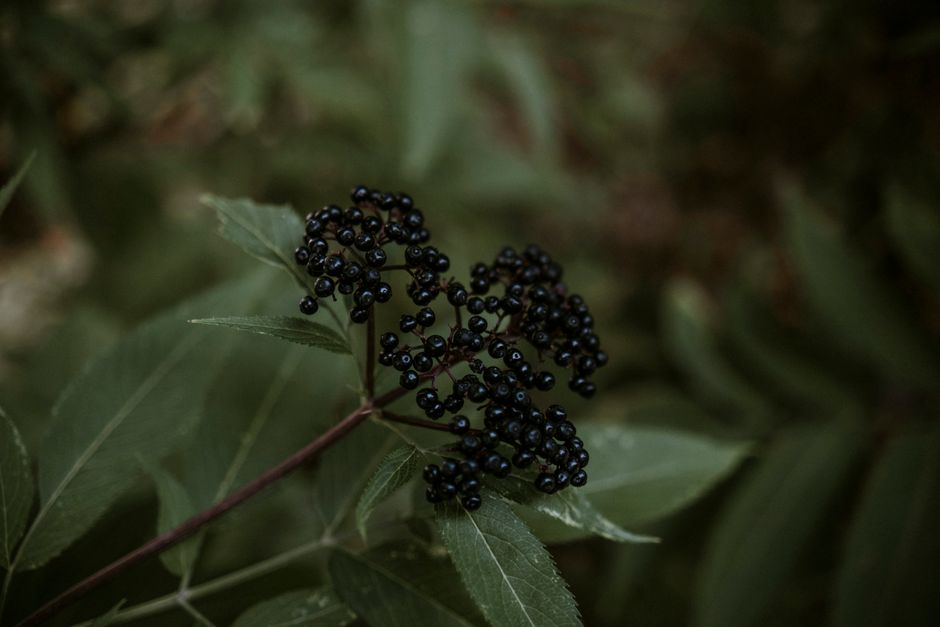
Walk into any pharmacy or health food store today and you will likely find elderberry products lining the shelves. But behind the colorful packaging lies a story that stretches back millennia — a story of a small, dark fruit that healers across vastly different cultures independently recognized as powerful medicine. What makes elderberry truly remarkable is not just its age-old reputation, but the fact that twenty-first century laboratory science keeps confirming what ancient practitioners observed through trial and experience alone.
Before understanding why elderberry works, it helps to understand what it actually is. Sambucus nigra is a fast-growing shrub or small tree capable of reaching heights of eight to nine meters under favorable conditions. It thrives across Europe, western Asia, and North America, colonizing roadsides, forest edges, and hedgerows with equal ease. Each spring and early summer, the plant erupts in broad, umbrella-shaped clusters of cream-white flowers with a distinctive floral fragrance. By late August those same clusters transform into dense, drooping bunches of berries so dark they appear almost black.
The elder is not a single-use plant. Its flowers, long fermented into cordials and wines across rural Europe, carry their own set of active compounds distinct from those in the berries. The bark and roots were historically used in stronger preparations, though their toxicity profile makes them unsuitable for casual use. Modern herbalists and supplement manufacturers focus almost exclusively on the ripe berry and the flower, where therapeutic value is highest and safety is most straightforward to manage.
Sambucus is a genus of approximately thirty species scattered across temperate zones on every inhabited continent. While Sambucus nigra dominates the commercial supplement market, two relatives deserve mention. Sambucus canadensis, the American black elderberry, grows wild from Nova Scotia to Florida and was a cornerstone of Indigenous North American healing traditions. Sambucus racemosa, the red elderberry of mountainous European and Asian regions, has a more limited medicinal history and a higher concentration of potentially irritating compounds in its raw fruit. Researchers consistently return to Sambucus nigra as the benchmark species because its phytochemical profile is the most thoroughly mapped and its clinical evidence base is the most robust.
The elder’s relationship with humanity predates written language. Archaeological digs at prehistoric European settlements have uncovered evidence of deliberate elder cultivation, suggesting that early communities were not simply foraging opportunistically but actively managing elder plants as a resource. This level of intentionality implies a degree of accumulated knowledge about the plant’s effects that we can only infer from the archaeological record.
By the time written medicine emerged in the ancient Mediterranean world, the elder was already well established as a therapeutic staple. The Greek physician Hippocrates catalogued the elder among his most relied-upon remedies, reportedly describing the tree as a complete medicine chest in itself — a phrase that would be echoed almost word for word by the English diarist and horticulturalist John Evelyn some two thousand years later. That a physician working in fifth-century BCE Greece and a seventeenth-century British naturalist arrived independently at the same metaphor says something meaningful about the consistency of the elder’s observed effects across time and geography.
One of the most compelling arguments for elderberry’s genuine efficacy is the pattern of independent discovery across cultures with no contact with one another. Cherokee healers in the southeastern United States used elderberry preparations to bring down fevers and treat respiratory infections. Iroquois communities in the northeast applied the flowers and berries to similar conditions. Meanwhile, practitioners of traditional Chinese medicine were using elder root and bark to reduce joint swelling and improve circulation in patients with rheumatic complaints — applications separated by an ocean from their North American counterparts but rooted in the same observed plant behavior.
This cross-cultural convergence is not proof of efficacy on its own, but it is a powerful signal. When peoples who never communicated with each other arrive at the same therapeutic conclusions about the same plant, the likelihood that those conclusions reflect real biological activity increases substantially. Modern pharmacology has since provided the molecular explanations for what these healers were observing empirically.
Skeptics of herbal medicine often suggest that traditional remedies survive on placebo effect and cultural momentum rather than genuine pharmacological action. Elderberry is one of the clearest counterexamples to that argument. Researchers have now identified and characterized multiple classes of biologically active compounds in Sambucus nigra berries, each with measurable effects on viral behavior and immune function.
The deep purple-black pigmentation of ripe elderberries is produced by a class of polyphenols called anthocyanins, primarily cyanidin-3-glucoside and cyanidin-3-sambubioside. These are not merely cosmetic molecules. Laboratory studies have demonstrated that elderberry anthocyanins physically bind to the surface proteins of influenza viruses, interfering with the virus’s ability to dock onto and penetrate host respiratory cells. Think of it as jamming the lock before the key can turn — the virus cannot initiate infection because its entry mechanism has been disabled. This mechanism operates upstream of the immune response itself, meaning the body faces a reduced viral load even before antibodies and T-cells are fully mobilized.
For those looking to take the next step, Become an Ultimate Master of your life is a resource worth exploring.
For those looking to take the next step, Heal your past, design your future is a resource worth exploring.
Beyond their antiviral activity, anthocyanins rank among the most potent antioxidants found in any commonly consumed fruit. Oxidative stress plays a well-documented role in amplifying inflammatory damage during respiratory infections, and compounds that neutralize free radicals help limit that collateral tissue injury.
Elderberry contains an impressive array of flavonoids, with quercetin, rutin, and kaempferol among the most pharmacologically significant. Quercetin has been the subject of hundreds of independent studies examining its effects on viral replication and inflammatory signaling. Its antiviral mechanism differs from that of anthocyanins: rather than blocking viral entry, quercetin inhibits enzymes that viruses require to replicate their genetic material once inside a host cell. This two-stage interference — anthocyanins at the point of entry, quercetin at the point of replication — means elderberry attacks influenza viruses at multiple steps in their life cycle simultaneously.
Quercetin also modulates the production of pro-inflammatory cytokines, the signaling molecules that coordinate immune responses. During severe influenza infections, cytokine overproduction — sometimes called a cytokine storm — can cause more tissue damage than the virus itself. By helping calibrate that response, quercetin may reduce the intensity of symptoms even when it cannot prevent infection entirely.
The commercial elderberry product most frequently cited in clinical research is Sambucol, a proprietary standardized black elderberry extract developed in Israel in the early 1990s by virologist Dr. Madeleine Mumcuoglu. Sambucol was one of the first elderberry preparations subjected to randomized controlled trials, and its consistent performance across multiple studies helped establish elderberry as a legitimate subject of pharmaceutical-grade investigation rather than simply a folk remedy. Standardization matters enormously in botanical medicine: without knowing the precise concentration of active compounds in a preparation, comparing results across studies or making dosing recommendations becomes nearly impossible.
The clinical literature on elderberry has grown substantially since the early Sambucol trials. A 2016 randomized controlled trial published in Nutrients followed airline passengers taking elderberry extract before and during long-haul flights — a high-exposure scenario for respiratory viruses. Those in the elderberry group experienced significantly fewer colds, and when they did become ill, their symptoms resolved faster and were less severe than those in the placebo group.
A 2019 meta-analysis published in Complementary Therapies in Medicine pooled data from multiple randomized trials and concluded that elderberry supplementation substantially reduced the duration of upper respiratory symptoms. The effect size was particularly pronounced for influenza, where elderberry appeared to shorten illness duration by an average of four days compared to placebo — a clinically meaningful difference that rivals the performance of some over-the-counter antiviral medications.
It is worth being precise about what the evidence does and does not support. Elderberry is not a vaccine and does not confer lasting immunity. It is not a replacement for antiviral pharmaceuticals in high-risk patients or severe infections. What the evidence supports is a meaningful reduction in symptom duration and severity when elderberry preparations are taken at the onset of illness — a role that fits well within a broader strategy for managing common respiratory infections.
Consumers today have access to elderberry in more formats than at any previous point in history. Liquid syrups remain the most popular form, partly because of their rapid absorption and partly because of their palatability — elderberry has a pleasant tart-sweet flavor that makes compliance easy for children and adults alike. Standardized capsules and soft gels offer convenience for travelers or those who prefer measured doses without the sugar content that some syrups contain. Lozenges and throat sprays deliver elderberry directly to the upper respiratory mucosa, which some practitioners argue is advantageous for throat and sinus infections specifically. Elderflower teas, while lower in the berry’s specific anthocyanins, offer their own set of anti-inflammatory flavonoids and have a long tradition of use for fever management.
Dosing recommendations vary by product and concentration, making it essential to follow manufacturer guidelines on standardized extracts rather than assuming equivalence across brands. Most clinical trials have used doses equivalent to 600 to 900 milligrams of standardized elderberry extract daily during acute illness, typically divided into two or three doses. Preventive dosing in the trials tends to be lower, often in the range of 300 milligrams daily.
Properly processed elderberry products have an excellent safety record in the published literature, with no serious adverse events reported in clinical trials at recommended doses. However, several important caveats apply. Raw elderberries, particularly unripe ones, contain sambunigrin and related cyanogenic glycosides that cause nausea, vomiting, and diarrhea. Cooking or heating destroys these compounds, which is why commercially prepared elderberry syrups and extracts are safe while raw berries are not. The bark, roots, and leaves contain these compounds in higher concentrations and should never be used in home preparations without expert guidance.
Individuals taking immunosuppressive medications should consult a physician before using elderberry, since its immune-stimulating properties could theoretically interfere with therapies designed to suppress immune activity — relevant for organ transplant recipients and those managing autoimmune conditions. Pregnant and breastfeeding individuals are typically advised to avoid elderberry in the absence of safety data for those populations. For most healthy adults and children over two years of age, however, standardized elderberry products used at recommended doses represent a low-risk option with meaningful potential benefit.
Elderberry performs best as a first-response tool for mild to moderate upper respiratory infections in otherwise healthy individuals. It is not appropriate as a primary treatment for bacterial infections, which require antibiotics, nor for severe influenza in high-risk patients, where prescription antivirals like oseltamivir remain the standard of care. Those seeking alternatives to elderberry within the realm of evidence-supported botanicals might consider andrographis, which has shown comparable results in some cold and flu trials, or zinc lozenges, whose antiviral mechanism is distinct but well documented. Vitamin D sufficiency, adequate sleep, and regular moderate exercise remain the most broadly evidence-supported foundations of immune resilience regardless of which specific supplements a person chooses.
Elderberry occupies an unusual position in the landscape of natural medicine. It earned its reputation once through thousands of years of empirical observation by healers on multiple continents, and it has now earned that reputation a second time through the tools of modern pharmacology and clinical trial methodology. The convergence of ancient wisdom and contemporary science around a single small berry is not something that happens often, and it is worth taking seriously when it does. Whether you encounter elderberry in a medieval herbal, a randomized controlled trial, or a bottle on a pharmacy shelf, you are looking at the same accumulated evidence pointing in the same direction.
Long before pharmaceutical companies began synthesizing anti-inflammatory drugs, healers across Asia were grinding a humble…
Long before clinical trials and peer-reviewed journals existed, healers across South Asia were grinding turmeric…
You are not lazy. You are not careless. You may simply be a victim of…
Most people assume that the path to a better life runs through more effort, more…
Biology is often misunderstood as a subject that rewards only memorisation. In reality, Uganda Certificate…
Chemistry sits at the intersection of memory, logic, and practical skill — yet thousands of…



Leave a Comment