Name: Carl Gustav Jung
Lifespan: 1875 – 1961
Origin: Swiss
Area of Expertise: Psychiatry, Psychology, Analytical Psychology
Global Significance: Carl Jung stands as a transformative figure in psychiatry, best known as the father of analytical psychology. He pioneered exploration into the human psyche, introducing concepts like the collective unconscious, universal archetypes, and the journey of individuation. His groundbreaking theories continue to resonate across diverse fields, including psychotherapy, literature, the arts, religious studies, and broader popular culture on a global scale.
Born in Kesswil, Switzerland, Carl Jung’s upbringing was steeped in religious tradition. His father served as a pastor within the Swiss Reformed Church, while his mother’s lineage was rooted in theology. Jung’s formative years were characterized by a vibrant inner world, populated with vivid dreams, profound visions, and an insatiable curiosity regarding the enigmatic workings of the human mind.
Jung’s early education fostered a passion for classical literature, philosophical inquiry, and historical analysis. Initially drawn to the study of archaeology or philology, he ultimately pursued a medical degree, specializing in the field of psychiatry. His academic pursuits at the University of Basel exposed him to the burgeoning discipline of psychology, particularly the work of Sigmund Freud, which profoundly shaped his initial professional trajectory.
A defining chapter in Jung’s early career was his tenure at the Burghölzli Mental Hospital in Zurich, where he provided care to individuals grappling with severe mental illnesses. This experience profoundly influenced his understanding of the human psyche and laid the foundation for his later theoretical developments. He began to observe patterns and symbols in the patients’ dreams and fantasies, which he believed offered insights into the unconscious mind.
Jung’s collaboration with Sigmund Freud marked a pivotal period in the history of psychoanalysis. Initially, Jung was a devoted follower of Freud, embracing his theories of the unconscious and the significance of dreams. He became a prominent figure in the psychoanalytic movement, serving as the first president of the International Psychoanalytic Association.
However, as Jung delved deeper into his own research and clinical practice, he began to develop his own distinct perspectives, which ultimately led to a divergence from Freud’s theories. Key areas of disagreement included the nature of the libido, the concept of the unconscious, and the role of sexuality in psychological development. Jung broadened the concept of libido beyond purely sexual drives, viewing it as a more generalized psychic energy. He also proposed the existence of a collective unconscious, a universal reservoir of archetypes and symbols shared by all humanity.
The intellectual and personal rift between Freud and Jung culminated in their separation in 1913. This marked a turning point in Jung’s career, as he embarked on his own independent path, developing his unique system of analytical psychology.
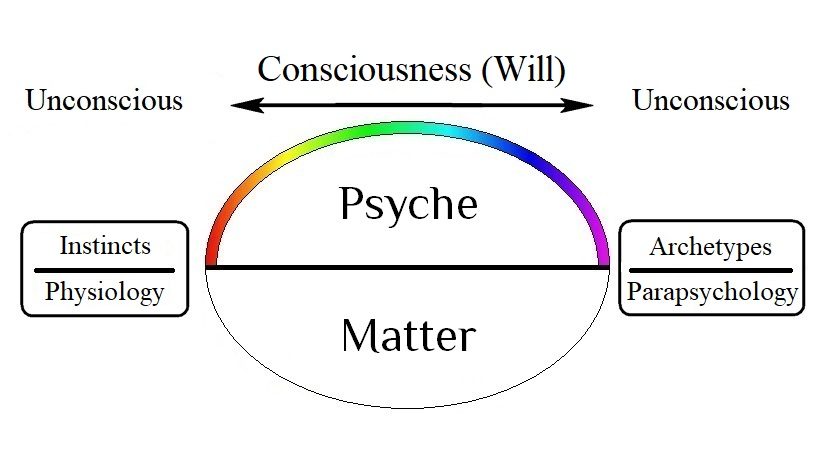
Central to Jung’s theory is the concept of the collective unconscious, a shared reservoir of universal experiences, instincts, and symbols inherited from our ancestors. Within the collective unconscious reside archetypes, primordial images and patterns of behavior that manifest in dreams, myths, and cultural symbols. Examples of archetypes include the Hero, the Mother, the Shadow, and the Anima/Animus.
Individuation is the central concept in Jungian psychology. It refers to the lifelong process of psychological development, whereby an individual integrates the conscious and unconscious aspects of their personality to achieve wholeness and self-realization. This involves confronting and integrating the Shadow, developing a balanced relationship with the Anima/Animus (the contrasexual aspects of the personality), and ultimately realizing the Self, the archetype of wholeness.
Jung developed a theory of psychological types, which categorizes individuals based on their dominant functions and attitudes. He identified four primary functions: thinking, feeling, sensation, and intuition, and two primary attitudes: introversion and extraversion. These combinations result in eight distinct psychological types, each with its own characteristic strengths and weaknesses. Understanding one’s psychological type can facilitate self-awareness and personal growth.
In his later years, Jung continued to refine and expand his theories, exploring the relationship between psychology, religion, and mythology. He traveled extensively, studying different cultures and religions, and seeking to understand the universal patterns underlying human experience. Jung died in 1961, leaving behind a vast body of work that continues to inspire and influence scholars, therapists, and individuals seeking deeper self-understanding.
Carl Jung’s impact extends far beyond the field of psychology. His ideas have profoundly influenced literature, art, religion, and popular culture. His concepts of the collective unconscious, archetypes, and individuation have resonated with artists, writers, and filmmakers, providing a framework for exploring universal themes and human experiences. His work has also had a significant impact on religious studies, particularly in the area of comparative religion and the study of myth and symbolism.
Jung’s work remains relevant today, offering valuable insights into the complexities of the human psyche and the search for meaning and purpose in life.
If you want a practical next step, you can also check out Heal your past, design your future.
If you want a practical next step, you can also check out Become an Ultimate Master of your life.
Long before pharmaceutical companies began bottling stress relief, healers across South Asia were grinding a…
Most people chasing AI literacy are solving the wrong problem — and that mistake could…
What if you could build a thriving social media channel without showing your face, spending…
The landscape of free AI voice generation has shifted dramatically — and those who haven't…
Ashwagandha is one of those rare botanical remedies that has survived millennia of scrutiny —…
While many traditional remedies have faded from relevance as modern medicine advanced, ashwagandha has taken…



Leave a Comment