

I think I’ve finally figured out what’s up with podcast audio. At least in
terms of:
-
What makes a good microphone
-
What makes a good sound signature in a podcast
-
Audio production
-
Etc.
So what I’m going to do is just blast you with what I at least think I know
at this point.
My audio journey
I’ve been studying this stuff in-depth since around 2019. And during the
pandemic I went hard on it. Like full audiophile.
I learned the science around what audiophiles were on about. I learned about
what makes good sound in music. I built my house in 2020 and put in
a pretty sick sound system.
But a lot of my focus was on finding the perfect sound for a podcast. Like
how I wanted to sound in audio, and what it takes to make that happen.
Previous posts
This post basically updates and replaces a lot of what I talked about in
those, although much of what I said before still holds.
The basics, in no particular order
First I’ll hit you with the science / reality stuff and then I’ll give you
some samples.
Dynamic microphones
-
Dynamic mics have less range but are more forgiving of noises.
-
The Shure SM7b is the most famous dynamic mic right now, and pretty much
every major podcaster uses it. -
The SM7b produces a pleasing, rounded, deep, but a little bit dead
sound. It makes you sound authoritative.
Condenser microphones
-
Condenser mics are extremely clear but very noisy because they pick up
everything. -
Condensers capture mouth noises, any room sounds, and pretty much
anything VERY clearly and accurately. -
They also pull in much more sound range, meaning way up towards 20,000
hz and beyond, which makes them sound less dead and more realistic. -
Examples include the Yeti series on the low end (less than $100), and
the Neumann U87ai on the high end ($4,500).
Common mistakes with post-production
-
Lots of podcasters—especially men—like a super-deep sound because they
think it makes them sound cool and authoritative. -
Unfortunately, all that extra bass sounds artificial over time and is
actually quite fatiguing to listen to. -
It’s also really hard to listen to in a car, where lots of people listen
to podcasts, because the low rumbling mixes with the road noise.
Signature sounds
-
The NPR sound is low bass and high clarity largely because they use
Neumann U87ai mics, and they like that clear sound.
The sounds of famous podcasters
-
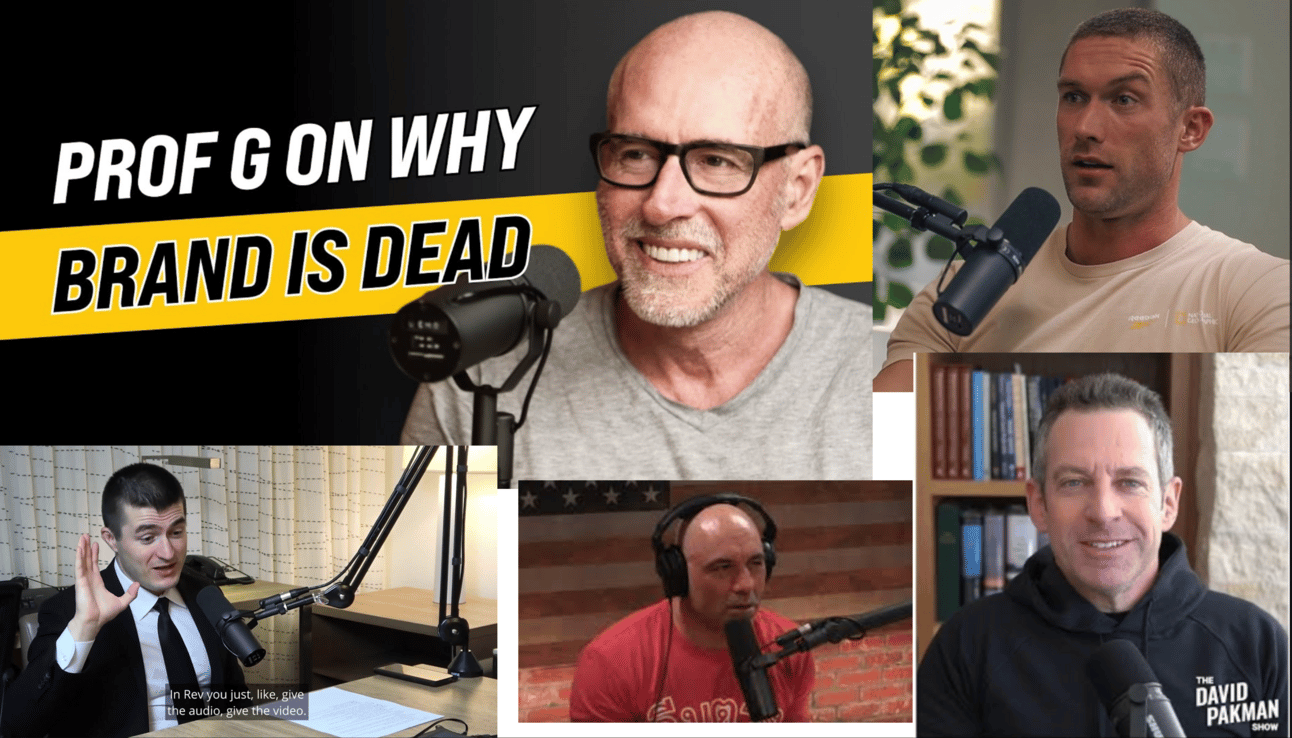
Sam Harris uses an SM7b (or the USB version) and keeps it pretty
clean with not too much post-production. He’s had the same signature for
years now. It’s basically mid-range, with some decent bass but not too
much, extremely clean in terms of mouth noises and background noises,
and a bit sterile. It works well for him because it’s like an
understated clean sound. -
Chris Williamson is a super-popular podcaster now and he also
uses SM7b’s, but he mixes his own mic with a lot of post-production to
have lots more highs and “ambience” added in. Which basically means
character. If you listen to his podcast his voice always has a strong
combination of deep but also bright. Really good production, and I’d be
surprised if he or his team ever shared his post-production chain. I bet
he considers it a trade secret. -
Joe Rogan also uses the SM7b and he has a sound profile that’s
very neutral and natural. I’m not sure if Jamie enhances the highs or
not, but the overall mix is very clean and clear. -
Lex Fridman is also on an SM7b and he has a pretty neutral sound
with some highs possibly added in. -
I believe Scott Galloway is on SM7b’s as well, and he definitely
has some added in highs after the fact. His sound is a lot more natural
and bright than something like Joe’s.
Tips for improving your audio
-
The general rule for audio is to do as much as possible at recording
time and as little as possible in post-production. That means 1) room
treatment, and generally having a quiet room if possible. -
Removing echo is a superpower for making audio sound amazing. Definitely
do this if you want to sound professional. I have been using DeVerberate
for years and love it. -
If you’re going to use the SM7b, my recommendation is to use the it with
bass rolled off and the highs raised on the microphone itself. This will
still have plenty of bass but it’ll make the mic sound much more natural
and vibrant vs. sterile and dead. -
Do as little post processing as possible.
-
Treat your room if possible.
-
Make sure to remove echo, even if you don’t think you have much.
Additional trivia / tricks
-
Loudness is deceptive and an enhancer. Basically, being louder sounds
better to most ears, but be careful with how you achieve it. -
Be careful with loudness without compression because you can start
clipping (cutting out from being too loud). -
Be careful with too much compresssion because it can remove the natural
sound and make it sound more sterile and dead.
My current setup
My current setup is quite clean and simple. I’ve moved away from my Neumann
U87ai because it picks up too much noise. Most importantly my mouth noises,
shaking feet, the sound of my clothing rubbing, etc.
-
SM7b
-
Fully treated studio / office where I work
-
Bass rolled off (on the mic hardware)
-
Highs enhanced (on the mic hardware)
-
RODECASTER PRO for my mixer
-
The only mod on my RODECASTER PRO is a noise gate
-
Post-production when I record in Hindenburg and not OBS:
-
DeVerberate for echo removal
-
Nectar 4 for noise gate
-
Nectar 4 for bass cutoff below 80
-
Nectar 4 for a slight lift in mid bass
-
Nectar 4 cutout at around 1500 hz to remove bad mids
-
Nectar 4 minor high shelf added after around 7000
-
Here’s what that sounds like
// My latest mic sound
Summary
-
You should probably use a dynamic mic unless you’re a trained studio
speaker. -
You should probably use a dynamic mic if you don’t have a treated room.
-
Resist the urge to add bass. It only sounds cool for a moment, and then
is bad for listeners. -
If you have any doubts, go with the SM7b. It’s a workhorse. And if you
can’t afford one yet (around $400), get the little brother USB version. -
If you do get an SM7b you’ll need an audio interface to put it in,
and/or a signal booster. -
Focus on getting a clean, natural sound from your voice, not
making it sound deep or booming. That is what will cut through the
listener’s environment and make it to them the best. -
Do as much as you can during recording, and try to modify it as little
as possible in post. -
Finally, don’t stress it too much. The content matters more anyway.


 Command Your Timeline: Heal the Past, Design Your FutureIntelligence,Skills Development
  SHAPTA MOCKS 2024
 Ultimate Me: Unlock Your Ultimate Potential & Energy HealingIntelligence,Skills Development
  NLSC: SENIOR THREE AGRICULTUREAgriculture,New Lower Secondary Curriculum,Ordinary Secondary
  NLSC: SENIOR THREE CHEMISTRY
 What is ChatGPT?General
 The Changing World of Crypto: How to Stay in the Game Without Losing Faith in YourselfGeneral
 Betrayal in the City by Francis ImbugaEducation lower secondary Politics
 The Moon also sets by Osi OgbuClass Subjects
- Meet Musinguzi John Paul – Your AI Teacher of Christian Religious Education for O-Level in UgandaEducation
- Meet Mbabazi Bridget – Your AI Teacher of Entrepreneurship for O-Level in UgandaEducation
 Babirye SandraO-LEVEL ENTREPRENUERSHIP,PETTY CASHBOOK ASSIGNMENT
- Babirye SandraO-LEVEL ENTREPRENUERSHIP,PETTY CASHBOOK ASSIGNMENT
- Babirye SandraO-LEVEL ENTREPRENUERSHIP,PETTY CASHBOOK ASSIGNMENT
NLSC: SENIOR THREE AGRICULTURE
- Aheebwa JosephDP: Digital Pedagogy Assignment8
- Aheebwa JosephDP: Digital Pedagogy Assignment6
- Aheebwa JosephDP: Digital Pedagogy Assignment 3
- mukose yekosanDP: Digital Pedagogy Final Project

0 responses on "Analysis of Mics and Mic Sounds Used by Podcasters"