Official Name: Carl Gustav Jung
Lifespan: July 26, 1875 – June 6, 1961
Origin: Swiss
Core Disciplines: Psychiatry, psychology, with a focus on symbolism and religious studies.
Global Impact: A visionary psychiatrist and the architect of analytical psychology, Carl Jung delved into the intricacies of the human psyche. He introduced groundbreaking ideas such as the collective unconscious, archetypes, and psychological types. These concepts have left an indelible mark on diverse fields, including psychology, spirituality, literature, and broader popular culture. Jung’s theories offer a structured approach to understanding personal growth, the quest for meaning, and the pursuit of psychological integration.
Born in Kesswil, Switzerland, Carl Jung was the son of Paul Achilles Jung, a pastor in the Swiss Reformed Church, and Emilie Preiswerk Jung. Coming from a family with a strong religious and academic heritage, Jung was exposed early on to philosophical and religious thought, sparking a lifelong fascination with the complexities of the human mind.
Jung’s childhood was characterized by a vibrant inner world and a feeling of being set apart from others. From an early age, he had powerful dreams and visions, which he later saw as expressions of the unconscious. These experiences deepened his interest in the hidden aspects of human existence.
He pursued medical studies at the University of Basel, eventually specializing in psychiatry.
Jung’s career began at the Burghölzli Mental Hospital in Zurich, where he worked under Eugen Bleuler. It was here that he began to develop his own psychological theories, initially influenced by Sigmund Freud’s psychoanalytic ideas.
Jung and Freud formed a close relationship, with Freud viewing Jung as his intellectual heir. They corresponded extensively and collaborated on various projects, promoting psychoanalysis internationally. However, their differing views on the nature of the unconscious and libido eventually led to a significant split.
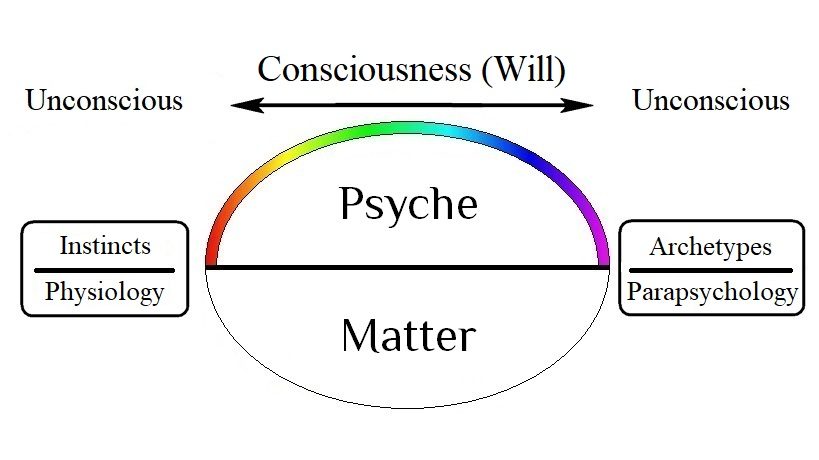
Jung’s concept of the libido differed from Freud’s, viewing it not solely as sexual energy but as a more generalized psychic energy. He also developed the concept of the collective unconscious, a universal layer of the unconscious mind containing archetypes, inherited patterns of thought and behavior. These differences, among others, led to a break with Freud in 1913, marking a pivotal moment in Jung’s career and the development of analytical psychology.
Analytical psychology, as developed by Jung, is characterized by several core concepts:
Jung considered dreams to be a vital source of information from the unconscious. He believed that dreams offer insights into the individual’s psychological state and can guide the process of individuation. Jungian dream analysis involves exploring the symbolism and personal associations within dreams to uncover their meaning.
In his later years, Jung continued to develop and refine his theories, exploring topics such as alchemy, mythology, and religion. He travelled extensively, studying different cultures and seeking to understand the universal patterns of human experience.
Jung’s work has had a profound impact on psychology, literature, art, and spirituality. His ideas continue to be explored and applied in various fields, offering a rich and complex understanding of the human psyche and the quest for meaning.
If you want a practical next step, you can also check out Heal your past, design your future.
If you want a practical next step, you can also check out Become an Ultimate Master of your life.
Uganda's Bold Leap into the Digital Age Imagine a classroom where textbooks are supplemented by…
Uganda Plugs Into the Digital Age: A Classroom Revolution Imagine Ugandan students learning about the…
Uganda's Education Transformation: From Pandemic Response to Long-Term Vision The COVID-19 pandemic presented unprecedented challenges…
The Nuances of Opinion: Rethinking Book Reviews We often think of book reviews as definitive…
Beyond the Basics: Mastering the Book Review In the sprawling world of literature, book reviews…
The Art of Book Reviewing: More Than Just a Summary Book reviews serve as vital…



Leave a Comment