


Related Courses

Command Your Timeline: Heal the Past, Design Your Future
Original price was: $ 360.$ 260Current price is: $ 260. per 3 months 20
SHAPTA MOCKS 2024
FREE 867
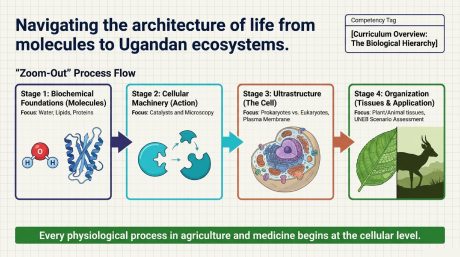
 ADVANCED LEVEL BIOLOGY, NEW CURRICULUM, SENIOR FIVEAdvanced Secondary,Biology
  Command Your Timeline: Heal the Past, Design Your FutureIntelligence,Skills Development
  SHAPTA MOCKS 2024
 Ultimate Me: Unlock Your Ultimate Potential & Energy HealingIntelligence,Skills Development
  NLSC: SENIOR THREE AGRICULTUREAgriculture,New Lower Secondary Curriculum,Ordinary Secondary
 What is ChatGPT?General
- Bridging the Digital Divide: Uganda’s Education Revolution Through Digital Literacy and Teacher TrainingGeneral
 Uganda’s Digital Leap: Transforming Primary Education Through TechnologyGeneral
- Uganda’s Education Renaissance: Combating Learning Loss and Empowering EducatorsGeneral
 The Art of the Subjective: Exploring the Nuances of Book ReviewingGeneral
 Crafting the Perfect Book Review: A Guide for Aspiring CriticsGeneral
 Unveiling the Layers: A Deep Dive into Book Reviewing Beyond Plot SummariesGeneral
 The Art of the Book Review: Beyond Summary, Towards Deeper ConnectionGeneral
 The Art of Crafting a Compelling Book Review: Beyond Summary and CritiqueGeneral
 Crafting Compelling Book Reviews: Beyond Summary, Towards InfluenceGeneral
- The Quintessential Watch Collection: A 30-Year Journey and Lessons for Ugandan LearnersGeneral
 KAKURU BENARDSample Activity of Integration on Forests, Forest resources and Forestry in Africa
- KAKURU BENARDSample Activity of Integration on Trade within and outside East Africa
 Babirye SandraO-LEVEL ENTREPRENUERSHIP,PETTY CASHBOOK ASSIGNMENT
- Babirye SandraO-LEVEL ENTREPRENUERSHIP,PETTY CASHBOOK ASSIGNMENT
- Babirye SandraO-LEVEL ENTREPRENUERSHIP,PETTY CASHBOOK ASSIGNMENT

CHEMISTRY AND SOCIETY
Chemistry is a laboratory science. Its subject materials and theories are based on experimental observation. However, its scope reaches out beyond the laboratory into every aspect of our lives – to our understanding of the nature of our planet, the environment we live in, the resources available to us and the factors that affect our health.
Therefore, in this chapter, you will be able to find out about the application of chemistry in
our everyday life and its contribution to our economy.
1.1: What is the Nature of Chemistry?
You have previously learnt that science is a study of living and non-living things. All living
and non-living things occupy space and are known as matter. We now look at science as
made of separate branches namely: chemistry, biology and physics. Each of the branches
of science deals with matter in a different way. Physics deals with the relationship
between energy and matter, biology deals with living things. In the following activity, you
will find out what chemistry deals with.
Activity
Finding products in our everyday life that are made with the knowledge of Chemistry.
Critically observe the pictures below and answer the following questions.
Fig 1.1: Showing some common products used in everyday life
The above picture shows some common products used in our everyday life. The products
are obtained using the knowledge of Chemistry.
1. Give the uses of the products in the picture above.
2. Name other products produced using the knowledge of Chemistry.
3. What careers require the study and knowledge of Chemistry?
The Meaning of Chemistry
Chemistry deals with the study of materials. In the following activity we shall explore the
meaning of chemistry further.
ACTIVITY
Finding out what changes take place to substances in everyday.
1. Burn a piece of paper using a candle or a lighted match stick. What changes take place
to the paper during the burning?
2. Now consider the following processes which take place in everyday life:
i ) The rusting of a kitchen knife
i i ) The boiling of water
i i i ) The rotting of fruits
i v) Describe the changes that take place in each of the processes (i – iii) above.
v) What are the necessary conditions for each of the above changes to take place?
3. Name any other processes in which materials change from one form to another?
The changes you have observed and many others show what the study of chemistry is
about.
Hence chemistry is the study of matter and the changes that occur to substances under
different conditions.
The Importance of Chemistry its Relationship to Relevant Careers
Everything is made of chemicals. Many of the changes you observe in the world around
you are caused by chemical reactions. Chemistry is very important because it helps you to
know the composition, structure and changes of matter. All matter is made up of
chemistry. In your everyday life, you use various forms of chemicals. You even use some of
them as food.
What are some examples of Chemistry in Daily Life?
You encounter chemistry every day, yet you might have trouble recognizing it, especially if
you are asked as part of an assignment!
What are some examples of chemistry in daily life? In the following activity, you will find
out things that concern chemistry in everyday life.
Examples of Chemistry in the Real World
There are many examples of Chemistry in daily life, showing how prevalent and important
it is.
i) Digestion relies on chemical reactions between food and acids and enzymes to break
down molecules into nutrients the body can absorb and use.
ii) Soaps and detergents act as emulsifiers to surround dirt and grime so it can be washed
away from clothing, dishes, and our bodies.
iii) Drugs work because of chemistry. The chemical compounds may fit into the binding
site for natural chemicals in our body (e.g., block pain receptors) or may attack
chemicals found in pathogens, but not human cells (e.g. antibiotics).
iv ) Cooking is a chemical change that alters food to make it more palatable, kill
dangerous micro-organisms, and make it more digestible. The heat for cooking may
denature proteins; promote chemical reactions between ingredients, sugars, etc.
Industry is very limited in Uganda. The most important sectors are the processing
of agricultural products (such as coffee curing), the manufacture of light consumer goods
and textiles, and the production of beverages, electricity, and cement.
Chemistry plays a vital role in feeding the world population. There are a number of
chemicals which help in increasing food production to keep pace with the growing
population of the world. These chemicals have both negative and positive impacts.
Activity of Integration
As a young Chemistry student, organise a half-day workshop for people in your
community to sensitise them on the application of Chemistry in their everyday life, and
the economic contribution of Chemistry to the country. Your sensitisation message should
clearly bring out the application of Chemistry in everyday life, contribution of Chemistry to
the economy of the society and ensure that members of the community appreciate the
use of Chemistry in everyday life.
You can use the resources in Fig. 2 and 3 to develop your message.
Task:
1. Develop short messages which you will deliver to the people in
this community about application of Chemistry in everyday life.
2. Develop some messages to illustrate the contribution of
Chemistry to the economy of the society.
3. How would you ensure the members of the community
appreciate the use of Chemistry in everyday life?
Hint: Use the resources in Fig. 2 and 3 to develop your message
ASSIGNMENT : LSC: Experimental Chemistry Assignment MARKS : 10 DURATION : 1 week, 3 days