
1. Overview
Jalal ad-Din Muhammad Rumi, widely known as Rumi, was a notable 13th-century Persian poet, Islamic scholar, and Sufi mystic. His literary works have crossed cultural and geographical divides. Born on September 30, 1207, in what is now Afghanistan, Rumi eventually made his home in Konya, Turkey, where he lived until his death on December 17, 1273. His poetry and teachings explore profound themes of love, spirituality, and the essence of human existence, establishing him as a pivotal figure in both literature and mysticism globally.
2. Early Life & Formation
Rumi was raised in a scholarly family, which greatly influenced his intellectual development. His father, Baha’ Walad, was a respected theologian who played a vital role in shaping Rumi’s early learning. After the passing of his father, Rumi embarked on extensive travels before settling in Konya. During this period, he encountered various religious and philosophical traditions, especially Sufism, which significantly molded his perspective.
2.1 Education and Influences
Rumi’s education began at home under the guidance of his father and continued at various centers of learning across the region. He studied Islamic law, theology, and philosophy, which laid a strong foundation for his later works. The influence of different cultures and ideas during his travels enriched his understanding and inspired his poetic voice.
2.2 Encounter with Shams
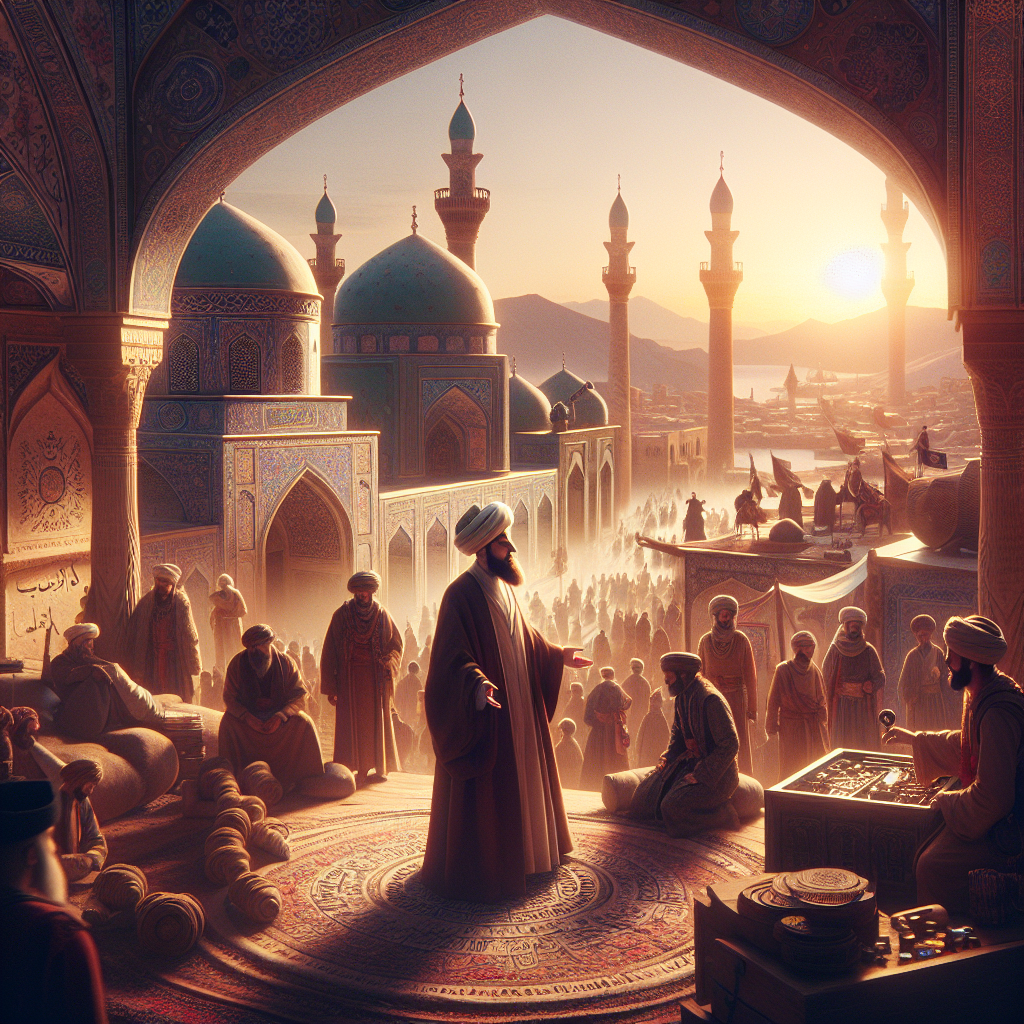
A pivotal moment in Rumi’s life was his encounter with Shams of Tabriz, a wandering dervish whose unorthodox views challenged Rumi’s understanding of spirituality. Their deep friendship profoundly influenced Rumi’s poetry, leading him to explore themes of divine love and connection. Shams encouraged Rumi to express his thoughts in poetry, resulting in some of his most famous verses.
3. Major Works, Teachings, or Contributions
Among Rumi’s most celebrated works is the Masnavi, a six-volume poem often hailed as one of the finest spiritual masterpieces in Persian literature. Another significant work is the Dīwān-e Shams-e Tabrīzī, a compilation of poems honoring his spiritual guide, Shams. His writings are renowned for their poetic beauty and profound insights into love, divinity, and the human experience. Rumi’s teachings highlight love as a pathway to spiritual enlightenment, setting him apart from other mystics of his era.
3.1 The Masnavi
The Masnavi, also known as the “Spiritual Couplets,” is often regarded as Rumi’s magnum opus. It consists of stories, parables, and philosophical discourse that delve into the nature of existence, the relationship between the divine and human beings, and the quest for truth. The work’s rich narrative style and depth have made it a cornerstone of Sufi literature.
3.2 The Dīwān-e Shams-e Tabrīzī
This collection of poetry reflects Rumi’s spiritual journey and his longing for Shams. It captures the ecstatic expression of love and the transformative power of spiritual companionship. The verses convey a sense of urgency in seeking unity with the divine and serve as a testament to the profound impact Shams had on Rumi’s life and work.
4. Core Philosophy or Teachings
Rumi’s philosophy is deeply rooted in the concepts of love, unity, and the divine. He believed that love is the ultimate force that connects all beings and transcends the boundaries of religion and culture. His teachings emphasize the importance of self-discovery and the inner journey toward understanding the nature of existence. Rumi’s poetry often reflects a quest for enlightenment and a merging with the divine, encouraging individuals to seek a deeper connection with themselves and the universe.
4.1 Love as a Pathway
For Rumi, love is not merely an emotion but a transformative force that leads to spiritual awakening. He viewed love as a bridge that connects the lover with the beloved, symbolizing the relationship between humanity and the divine. His verses articulate the idea that through love, individuals can transcend their limitations and experience a profound sense of unity with all creation.
4.2 The Role of the Self
Rumi emphasized the significance of self-awareness and introspection in the spiritual journey. He believed that understanding oneself is crucial for recognizing the divine presence within. His poetry often encourages readers to look beyond societal norms and discover their true essence, fostering a sense of authenticity and connection to the greater cosmos.
5. Global Influence and Legacy
Rumi’s works have had a profound impact on literature, spirituality, and philosophy across the globe. His poetry has been translated into numerous languages, making his teachings accessible to diverse audiences. Rumi’s emphasis on love and unity resonates with people of various cultures and backgrounds, contributing to his enduring popularity. Today, Rumi is celebrated not only in the literary world but also in contemporary spiritual practices, where his insights continue to inspire seekers of truth and meaning.
5.1 Influence on Literature
Rumi’s poetic style and themes have influenced countless writers and poets throughout history. His ability to blend mysticism with everyday experiences has made his work appealing to both spiritual seekers and literary enthusiasts. Many contemporary poets draw inspiration from Rumi’s exploration of love, nature, and the human experience, reflecting his timeless relevance.
5.2 Influence on Spirituality
Rumi’s teachings have transcended cultural and religious boundaries, appealing to individuals seeking spiritual growth and understanding. His emphasis on love, acceptance, and the interconnectedness of all beings has found resonance in modern spiritual movements. Rumi’s messages continue to encourage individuals to explore their spirituality and foster compassion in an increasingly fragmented world.
If you want a practical next step, you can also check out Heal your past, design your future.
If you want a practical next step, you can also check out Become an Ultimate Master of your life.


 ADVANCED LEVEL BIOLOGY, NEW CURRICULUM, SENIOR FIVEAdvanced Secondary,Biology
  Command Your Timeline: Heal the Past, Design Your FutureIntelligence,Skills Development
  SHAPTA MOCKS 2024
 Ultimate Me: Unlock Your Ultimate Potential & Energy HealingIntelligence,Skills Development
  NLSC: SENIOR THREE AGRICULTUREAgriculture,New Lower Secondary Curriculum,Ordinary Secondary
 What is ChatGPT?General
- Bridging the Digital Divide: Uganda’s Education Revolution Through Digital Literacy and Teacher TrainingGeneral
 Uganda’s Digital Leap: Transforming Primary Education Through TechnologyGeneral
- Uganda’s Education Renaissance: Combating Learning Loss and Empowering EducatorsGeneral
 The Art of the Subjective: Exploring the Nuances of Book ReviewingGeneral
 Crafting the Perfect Book Review: A Guide for Aspiring CriticsGeneral
 Unveiling the Layers: A Deep Dive into Book Reviewing Beyond Plot SummariesGeneral
 The Art of the Book Review: Beyond Summary, Towards Deeper ConnectionGeneral
 The Art of Crafting a Compelling Book Review: Beyond Summary and CritiqueGeneral
 Crafting Compelling Book Reviews: Beyond Summary, Towards InfluenceGeneral
- The Quintessential Watch Collection: A 30-Year Journey and Lessons for Ugandan LearnersGeneral
 KAKURU BENARDSample Activity of Integration on Forests, Forest resources and Forestry in Africa
- KAKURU BENARDSample Activity of Integration on Trade within and outside East Africa
 Babirye SandraO-LEVEL ENTREPRENUERSHIP,PETTY CASHBOOK ASSIGNMENT
- Babirye SandraO-LEVEL ENTREPRENUERSHIP,PETTY CASHBOOK ASSIGNMENT
- Babirye SandraO-LEVEL ENTREPRENUERSHIP,PETTY CASHBOOK ASSIGNMENT

0 responses on "Rumi — Life, Ideas, Teachings & Global Influence"