
Carl Jung: A Biographical Sketch
Full Name: Carl Gustav Jung
Lifespan: July 26, 1875 – June 6, 1961
Origin: Swiss
Core Discipline: Psychiatry, Analytical Psychology

Global Impact: Carl Jung, a visionary psychiatrist, established analytical psychology, leaving an indelible mark on diverse disciplines such as philosophy, anthropology, literature, and theology. His groundbreaking concepts, including the collective unconscious, archetypes, and the process of individuation, are fundamental to comprehending the human psyche and cultural expressions across the globe.
The Genesis of a Mind: Early Life and Influences
Born in Kesswil, Switzerland, Carl Jung’s upbringing was steeped in religious and intellectual heritage. His father, Paul Achilles Jung, served as a pastor, while his mother, Emilie Preiswerk Jung, came from a family with a strong clerical and academic background. This environment nurtured a precocious interest in the intricacies of the human spirit and the enigmas of existence. As a child, Jung was introspective, often retreating into his inner world of vivid dreams, which he perceived as laden with profound significance. These formative experiences paved the way for his lifelong exploration into the depths of the unconscious.
Jung’s academic pursuits reflected his boundless curiosity. He initially contemplated fields such as archaeology and philology before ultimately choosing medicine with a focus on psychiatry. His studies at the University of Basel exposed him to the influential works of various philosophers.
Early Career and Association with Freud
Jung’s career began at the Burghölzli Psychiatric Clinic in Zurich, under the mentorship of Eugen Bleuler, a pioneer in schizophrenia research. It was during this period that Jung’s interest in psychoanalysis began to blossom. He meticulously studied Sigmund Freud’s work, finding resonance with Freud’s theories on the unconscious and the interpretation of dreams. This led to a significant correspondence and eventual personal and professional relationship with Freud.

The collaboration between Jung and Freud was initially fruitful, with Jung becoming a prominent figure in the psychoanalytic movement. He was appointed as the president of the International Psychoanalytical Association, solidifying his position as Freud’s heir apparent. However, their intellectual paths soon diverged, leading to a profound and ultimately irreconcilable split.
The Divergence: A Clash of Ideas
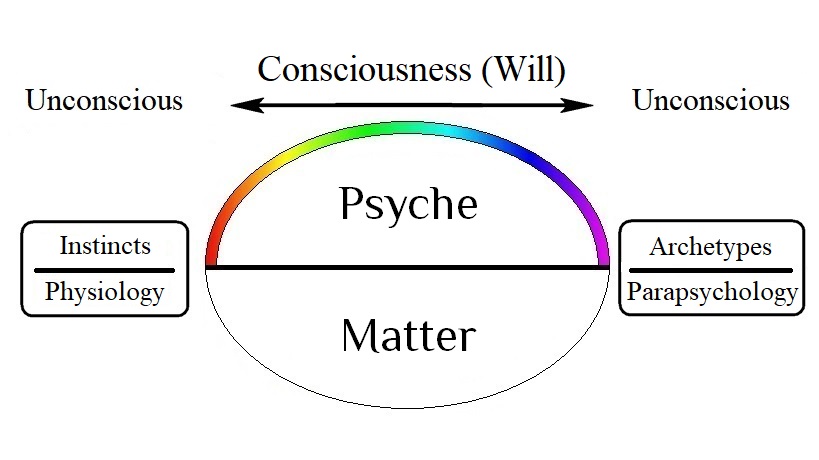
The core of their disagreement lay in differing conceptions of the unconscious. While Freud emphasized the personal unconscious, driven by repressed desires and experiences, Jung posited the existence of a collective unconscious, a universal reservoir of archetypes and inherited predispositions shared by all humanity. This fundamental difference, along with disagreements on the nature of libido and the Oedipus complex, ultimately led to the dissolution of their partnership. Jung’s departure from the psychoanalytic movement marked the beginning of his independent journey and the development of analytical psychology.
Key Concepts in Jungian Psychology
Analytical psychology, as developed by Jung, encompasses a rich tapestry of concepts that offer profound insights into the human psyche. These concepts are not merely theoretical constructs but rather tools for understanding and facilitating the process of individuation, the central goal of Jungian analysis.
The Collective Unconscious and Archetypes
Perhaps the most distinctive feature of Jungian psychology is the concept of the collective unconscious. This is not a personal reservoir of repressed memories but rather a universal and inherited psychic system containing archetypes, primordial images and patterns of behavior that are common to all humanity. Archetypes manifest in dreams, myths, and religious symbols, shaping our experiences and influencing our actions. Examples of archetypes include the Mother, the Father, the Hero, the Shadow, and the Self.
Individuation: The Journey to Wholeness
Individuation is the central concept in Jungian psychology, referring to the lifelong process of psychological differentiation and integration. It involves becoming conscious of one’s unique psychological makeup, including both conscious and unconscious aspects, and integrating them into a unified whole. This process leads to a greater sense of self-awareness, authenticity, and purpose. It is not a passive process but rather an active engagement with one’s inner world, requiring self-reflection, confrontation with the shadow, and the integration of opposing forces within the psyche.
Psychological Types: Understanding Individual Differences
Jung also developed a theory of psychological types, based on the concepts of introversion and extraversion, and the four psychological functions: thinking, feeling, sensation, and intuition. This theory provides a framework for understanding individual differences in personality and behavior. Introverts are oriented towards the inner world of thoughts and feelings, while extraverts are oriented towards the external world of people and events. The four functions represent different ways of perceiving and processing information. By understanding one’s psychological type, individuals can gain insights into their strengths and weaknesses, and develop strategies for personal growth and improved relationships.
Jung’s Legacy and Global Influence
Carl Jung’s ideas have had a profound and lasting impact on a wide range of fields, including psychology, literature, art, religion, and popular culture. His concepts have provided valuable tools for understanding the human psyche and cultural phenomena, inspiring countless individuals to embark on their own journeys of self-discovery and transformation.
His work continues to be studied and applied by therapists, scholars, and artists around the world, ensuring that his legacy will endure for generations to come. His emphasis on the importance of the unconscious, the process of individuation, and the recognition of archetypal patterns in human experience offers a timeless and relevant perspective on the human condition.
If you want a practical next step, you can also check out Heal your past, design your future.
If you want a practical next step, you can also check out Become an Ultimate Master of your life.


 ADVANCED LEVEL BIOLOGY, NEW CURRICULUM, SENIOR FIVEAdvanced Secondary,Biology
  Command Your Timeline: Heal the Past, Design Your FutureIntelligence,Skills Development
  SHAPTA MOCKS 2024
 Ultimate Me: Unlock Your Ultimate Potential & Energy HealingIntelligence,Skills Development
  NLSC: SENIOR THREE AGRICULTUREAgriculture,New Lower Secondary Curriculum,Ordinary Secondary
 What is ChatGPT?General
- Bridging the Digital Divide: Uganda’s Education Revolution Through Digital Literacy and Teacher TrainingGeneral
 Uganda’s Digital Leap: Transforming Primary Education Through TechnologyGeneral
- Uganda’s Education Renaissance: Combating Learning Loss and Empowering EducatorsGeneral
 The Art of the Subjective: Exploring the Nuances of Book ReviewingGeneral
 Crafting the Perfect Book Review: A Guide for Aspiring CriticsGeneral
 Unveiling the Layers: A Deep Dive into Book Reviewing Beyond Plot SummariesGeneral
 The Art of the Book Review: Beyond Summary, Towards Deeper ConnectionGeneral
 The Art of Crafting a Compelling Book Review: Beyond Summary and CritiqueGeneral
 Crafting Compelling Book Reviews: Beyond Summary, Towards InfluenceGeneral
- The Quintessential Watch Collection: A 30-Year Journey and Lessons for Ugandan LearnersGeneral
 KAKURU BENARDSample Activity of Integration on Forests, Forest resources and Forestry in Africa
- KAKURU BENARDSample Activity of Integration on Trade within and outside East Africa
 Babirye SandraO-LEVEL ENTREPRENUERSHIP,PETTY CASHBOOK ASSIGNMENT
- Babirye SandraO-LEVEL ENTREPRENUERSHIP,PETTY CASHBOOK ASSIGNMENT
- Babirye SandraO-LEVEL ENTREPRENUERSHIP,PETTY CASHBOOK ASSIGNMENT
0 responses on "Carl Jung — Life, Ideas, Teachings & Global Influence"