
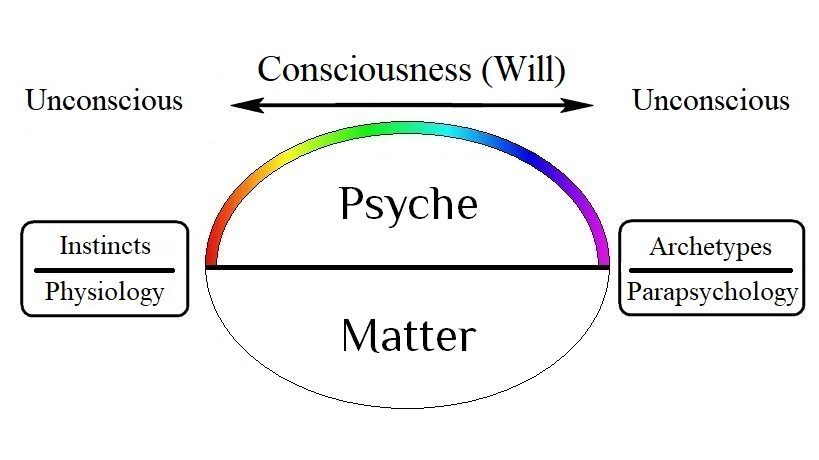
Overview
Full Name: Carl Gustav Jung
Life Span: 1875–1961
Origin: Swiss
Areas of Expertise: Psychiatry, Psychology, Philosophy, Spirituality

Global Impact: Carl Jung, a groundbreaking figure in psychiatry and psychoanalysis, established analytical psychology. His influential work extends beyond psychology, impacting fields like philosophy, anthropology, literature, and religious thought. Jung’s ideas, including the collective unconscious, archetypes, and the process of individuation, remain relevant for those exploring self-discovery and purpose.
Early Years and Intellectual Development
Born in Kesswil, Switzerland, Carl Jung’s upbringing was steeped in religious tradition. His father served as a pastor in the Swiss Reformed Church, and his mother’s family had deep roots in theology. Jung’s formative years were characterized by a vibrant inner world and a deep curiosity about dreams, visions, and the enigmatic aspects of the human psyche.
He pursued medical studies at the University of Basel, with a focus on psychiatry. Early influences included Pierre Janet, a prominent French psychologist, and Eugen Bleuler, the director of the Burghölzli mental hospital in Zurich, where Jung commenced his psychiatric practice. These experiences played a crucial role in shaping his initial perspectives on mental illnesses and the workings of the unconscious mind.
A defining moment in Jung’s intellectual journey was his exchange of ideas and subsequent partnership with Sigmund Freud. This collaboration had a significant influence on Jung’s theoretical framework.
The Freud-Jung Collaboration and Divergence
Jung’s association with Sigmund Freud marked a pivotal period in his career. Initially, he was a fervent supporter of Freud’s psychoanalytic theories and played a key role in promoting psychoanalysis. He became the first president of the International Psychoanalytic Association. However, as Jung delved deeper into his research and personal experiences, fundamental differences in their perspectives began to emerge.
The primary point of contention revolved around the nature of the unconscious. While Freud emphasized the personal unconscious, rooted in repressed experiences, Jung proposed the concept of the collective unconscious, a universal reservoir of archetypes and primordial images inherited from our ancestors. This divergence, along with other theoretical disagreements, eventually led to a painful but necessary separation between Jung and Freud, marking the birth of Jung’s own school of thought: Analytical Psychology.
Key Concepts in Analytical Psychology
Jung’s Analytical Psychology is characterized by several core concepts that distinguish it from Freudian psychoanalysis:
- The Collective Unconscious: A universal layer of the unconscious mind containing archetypes inherited from ancestral experiences.
- Archetypes: Universal, symbolic patterns of behavior and imagery present in the collective unconscious, such as the Hero, the Mother, and the Shadow.
- Individuation: The lifelong process of psychological differentiation, integrating conscious and unconscious aspects of the personality to become a whole and unique individual.
- The Persona: The social mask or role we present to the world, which can sometimes obscure our true selves.
- The Shadow: The unconscious aspect of the personality that embodies repressed or denied qualities, often perceived as negative.
- The Anima and Animus: The contrasexual aspects of the psyche; the anima representing the feminine side in men and the animus representing the masculine side in women.
Jung’s Influence and Legacy
Carl Jung’s influence extends far beyond the realm of psychology. His ideas have permeated various disciplines, including:
- Literature: Jungian archetypes and symbolism are frequently explored in literature and film.
- Art: Artists have drawn inspiration from Jung’s concepts of the unconscious and the symbolic nature of dreams.
- Religion and Spirituality: Jung’s work has provided valuable insights into the nature of religious experience and the search for meaning.
- Personal Development: The process of individuation has become a guiding principle for individuals seeking self-discovery and personal growth.
Jung’s legacy continues to inspire and challenge individuals to explore the depths of their own psyches and to embrace the journey of becoming whole.
Further Exploration
To delve deeper into the works of Carl Jung, consider exploring the following resources:
- Psychology and Alchemy
- The Archetypes and the Collective Unconscious
- Man and His Symbols
If you want a practical next step, you can also check out Heal your past, design your future.
If you want a practical next step, you can also check out Become an Ultimate Master of your life.


 UACE UNEB SAMPLE PAPERS 2026Advanced Secondary
  ADVANCED LEVEL BIOLOGY, NEW CURRICULUM, SENIOR FIVEAdvanced Secondary,Biology
  Command Your Timeline: Heal the Past, Design Your FutureIntelligence,Skills Development
  SHAPTA MOCKS 2024
 Ultimate Me: Unlock Your Ultimate Potential & Energy HealingIntelligence,Skills Development
 What is ChatGPT?General
 Digital Literacy in Uganda: Why Schools Are Falling BehindGeneral
 Elderberry: The Wildcrafted Herb That Heals NaturallyGeneral
 Turmeric: The Golden Herb That Heals From the Inside OutGeneral
 Turmeric: The Golden Herb That Heals From the Inside OutGeneral
 Closing the Skills Gap: How Industry-Led Skilling Shapes Your FutureGeneral
 Turmeric: The Golden Herb That Heals From the Inside OutGeneral
 Turmeric: The Golden Herb That Heals From the Inside OutGeneral
- BookTok’s Hidden Power: How Readers Are Rewriting Their LivesGeneral
 Susan Grau: Trapped in a Freezer at 4 — Her NDE Changed EverythingGeneral
 How Uganda Students Can Master Exams & Transform Their LearningGeneral
 KAKURU BENARDSample Activity of Integration on Forests, Forest resources and Forestry in Africa
- KAKURU BENARDSample Activity of Integration on Trade within and outside East Africa
 Babirye SandraO-LEVEL ENTREPRENUERSHIP,PETTY CASHBOOK ASSIGNMENT
- Babirye SandraO-LEVEL ENTREPRENUERSHIP,PETTY CASHBOOK ASSIGNMENT
- Babirye SandraO-LEVEL ENTREPRENUERSHIP,PETTY CASHBOOK ASSIGNMENT
0 responses on "Profile: Carl Jung — Life, Ideas, Teachings & Global Influence"