
Carl Jung: A Life Dedicated to Exploring the Depths of the Psyche
1. Core Information
Name: Carl Gustav Jung
Lifespan: 1875–1961
Origin: Switzerland
Areas of Expertise: Psychiatry, psychology, analytical psychology

Global Significance: Carl Jung, a Swiss psychiatrist and the founder of analytical psychology, left an indelible mark on numerous fields. His groundbreaking work profoundly influenced psychology, philosophy, religion, literature, and the arts. Jung’s enduring concepts—the collective unconscious, archetypes, and the journey of individuation—revolutionized our comprehension of the human mind and its capacity for growth. He dedicated himself to understanding the psyche’s profound connection to spirituality and personal evolution.
2. Formative Years
Born in Kesswil, Switzerland, in 1875, Carl Jung’s upbringing was steeped in religious and mystical influences. His father served as a pastor, while his mother’s lineage was intertwined with mysticism. Jung’s early life was characterized by a vibrant inner world, populated by intense dreams and imaginative fantasies. As a somewhat isolated child, he felt a sense of otherness, nurturing introspection and a profound fascination with the essence of existence.
Jung pursued his medical studies at the University of Basel, initially focusing on medicine but soon gravitating towards psychiatry. This shift was fueled by his deep interest in the human psyche and the workings of the unconscious mind. His early experiences and academic pursuits laid the foundation for his groundbreaking theories and practices.
Key Concepts in Jungian Psychology
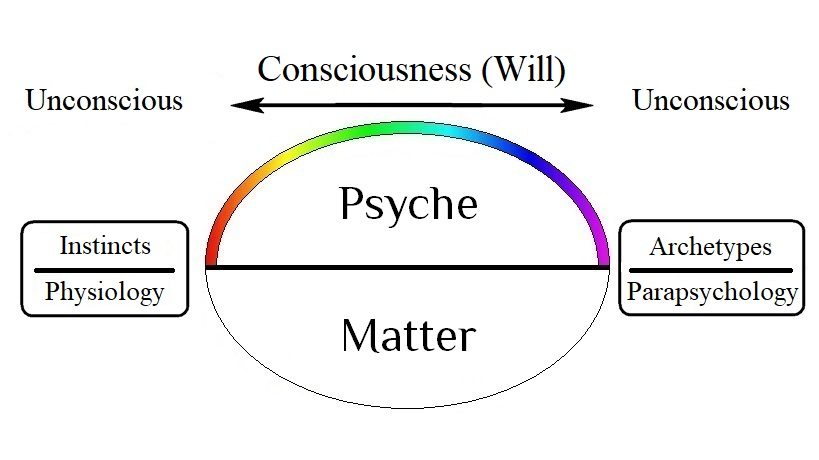
Jungian psychology, also known as analytical psychology, diverges from Freudian psychoanalysis in several key aspects. Jung emphasized the importance of the collective unconscious, a universal reservoir of ancestral memories and archetypes shared by all humanity.

The Collective Unconscious and Archetypes
The collective unconscious, according to Jung, is distinct from the personal unconscious, which contains repressed memories and experiences unique to each individual. The collective unconscious is populated by archetypes, universal patterns of behavior and imagery that manifest in myths, dreams, and symbols across cultures. Some of the most prominent archetypes include:
- The Persona: The social mask we present to the world.
- The Shadow: The repressed, darker aspects of our personality.
- The Anima/Animus: The feminine aspect of the male psyche (Anima) and the masculine aspect of the female psyche (Animus).
- The Self: The center of the personality, striving for wholeness and integration.
Individuation: The Journey to Wholeness
A central concept in Jungian psychology is individuation, the lifelong process of psychological differentiation and integration. It involves becoming aware of and integrating the various aspects of the personality, including the conscious and unconscious, the personal and collective. This journey leads to a greater sense of self-awareness, authenticity, and wholeness.
Jung’s Relationship with Sigmund Freud
Jung initially collaborated with Sigmund Freud, the founder of psychoanalysis, and was considered his protégé. However, their relationship eventually fractured due to fundamental differences in their theoretical approaches. Jung disagreed with Freud’s emphasis on sexuality as the primary motivator of human behavior and his reductionistic view of the unconscious.
The split between Jung and Freud marked a significant turning point in the history of psychology, leading to the development of analytical psychology as a distinct school of thought.
Jung’s Influence and Legacy
Carl Jung’s ideas have had a profound and lasting impact on various fields. His work has influenced literature, art, religion, and popular culture. Jungian concepts continue to be explored and applied in psychotherapy, personal development, and spiritual practices.
His exploration of dreams, symbols, and the unconscious mind has provided valuable insights into the human condition, inspiring countless individuals to embark on their own journeys of self-discovery and transformation.
Major Works by Carl Jung
Jung authored numerous books and articles throughout his career. Some of his most influential works include:
- Psychology of the Unconscious (1912)
- Psychological Types (1921)
- Modern Man in Search of a Soul (1933)
- The Archetypes and the Collective Unconscious (1954)
- Memories, Dreams, Reflections (1961)
If you want a practical next step, you can also check out Heal your past, design your future.
If you want a practical next step, you can also check out Become an Ultimate Master of your life.


 ADVANCED LEVEL BIOLOGY, NEW CURRICULUM, SENIOR FIVEAdvanced Secondary,Biology
  Command Your Timeline: Heal the Past, Design Your FutureIntelligence,Skills Development
  SHAPTA MOCKS 2024
 Ultimate Me: Unlock Your Ultimate Potential & Energy HealingIntelligence,Skills Development
  NLSC: SENIOR THREE AGRICULTUREAgriculture,New Lower Secondary Curriculum,Ordinary Secondary
 What is ChatGPT?General
- Bridging the Digital Divide: Uganda’s Education Revolution Through Digital Literacy and Teacher TrainingGeneral
 Uganda’s Digital Leap: Transforming Primary Education Through TechnologyGeneral
- Uganda’s Education Renaissance: Combating Learning Loss and Empowering EducatorsGeneral
 The Art of the Subjective: Exploring the Nuances of Book ReviewingGeneral
 Crafting the Perfect Book Review: A Guide for Aspiring CriticsGeneral
 Unveiling the Layers: A Deep Dive into Book Reviewing Beyond Plot SummariesGeneral
 The Art of the Book Review: Beyond Summary, Towards Deeper ConnectionGeneral
 The Art of Crafting a Compelling Book Review: Beyond Summary and CritiqueGeneral
 Crafting Compelling Book Reviews: Beyond Summary, Towards InfluenceGeneral
- The Quintessential Watch Collection: A 30-Year Journey and Lessons for Ugandan LearnersGeneral
 KAKURU BENARDSample Activity of Integration on Forests, Forest resources and Forestry in Africa
- KAKURU BENARDSample Activity of Integration on Trade within and outside East Africa
 Babirye SandraO-LEVEL ENTREPRENUERSHIP,PETTY CASHBOOK ASSIGNMENT
- Babirye SandraO-LEVEL ENTREPRENUERSHIP,PETTY CASHBOOK ASSIGNMENT
- Babirye SandraO-LEVEL ENTREPRENUERSHIP,PETTY CASHBOOK ASSIGNMENT
0 responses on "Profile: Carl Jung — Life, Ideas, Teachings & Global Influence"