
Carl Jung: Life, Ideas, Teachings & Global Influence
1. Essential Facts
- Full Name: Carl Gustav Jung
- Lifespan: 1875 – 1961
- Origin: Switzerland
- Key Disciplines: Psychiatry, Psychology, Psychoanalysis
- Global Impact: A groundbreaking figure in psychiatry and the founder of analytical psychology. Jung’s theories have had a lasting impact on diverse fields, including philosophy, anthropology, literature, and religious thought. His ideas, such as the collective unconscious, archetypes, and the process of individuation, continue to offer valuable insights into the human psyche and its potential for personal development.
2. Childhood and Intellectual Development
Born in Kesswil, Switzerland, in 1875, Carl Jung’s upbringing was deeply influenced by his family’s religious and spiritual background. His father served as a pastor in the Swiss Reformed Church, while his mother’s family had connections to spiritualism. Jung’s early years were characterized by a vibrant inner world filled with dreams, visions, and a strong curiosity about the complexities of the human mind. He was an observant and thoughtful child who often felt detached from those around him. These formative experiences ignited his passion for understanding the unconscious and the symbolic language of the psyche.
Jung initially pursued medicine at the University of Basel with the intention of becoming a surgeon. However, his path shifted after encountering a textbook on mental disorders. He became particularly interested in the study of schizophrenia, believing it held important keys to understanding the depths of the unconscious mind. This marked a turning point in his career, leading him towards psychiatry and a lifelong exploration of the human psyche.
3. Early Career and Association with Freud
Jung’s career began at the Burghölzli Psychiatric Clinic in Zurich, where he worked under the guidance of Eugen Bleuler, a pioneer in the study of schizophrenia. It was during this time that Jung developed his word association test, a technique used to uncover unconscious complexes by analyzing a person’s responses to a series of words. This innovative approach gained him international recognition and brought him to the attention of Sigmund Freud.
The relationship between Jung and Freud was initially one of mutual admiration and collaboration. Jung became a prominent figure in the psychoanalytic movement and was even considered Freud’s heir apparent. However, their differing views on the nature of the unconscious and the role of sexuality in psychological development eventually led to a bitter split. Jung’s concept of the collective unconscious, which posited the existence of universal, inherited archetypes, directly contradicted Freud’s emphasis on individual, repressed experiences. This fundamental disagreement marked the end of their professional and personal relationship in 1913.
4. Development of Analytical Psychology
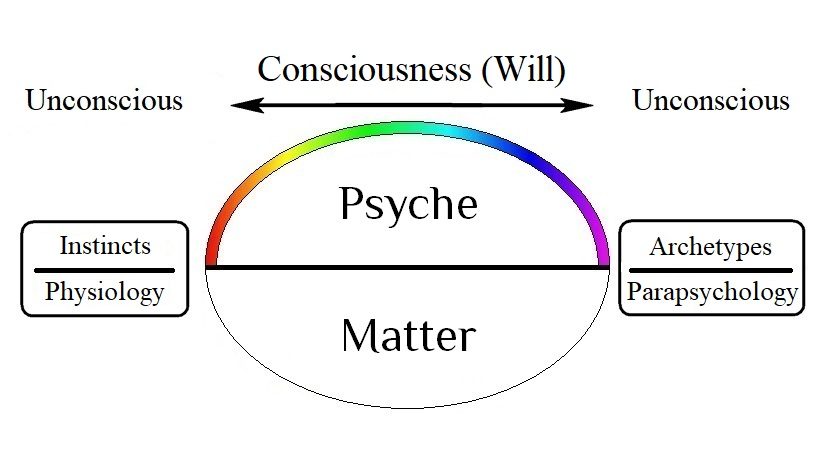
Following his break with Freud, Jung embarked on a period of intense self-reflection and exploration, leading to the development of his own distinct school of thought: analytical psychology. This approach emphasizes the importance of integrating conscious and unconscious aspects of the personality to achieve wholeness, a process Jung termed “individuation.”
4.1 Key Concepts in Analytical Psychology
- The Collective Unconscious: A universal layer of the unconscious mind containing archetypes, inherited patterns of behavior and imagery.
- Archetypes: Universal, symbolic representations of fundamental human experiences, such as the mother, the hero, and the shadow.
- Individuation: The lifelong process of integrating conscious and unconscious aspects of the personality to achieve wholeness and self-realization.
- The Persona: The social mask or role that individuals adopt to present themselves to the world.
- The Shadow: The unconscious aspect of the personality that contains repressed or denied aspects of the self, often perceived as negative or undesirable.
- The Anima/Animus: The unconscious feminine aspect in men (anima) and the unconscious masculine aspect in women (animus).
5. Jung’s Later Life and Influence
In his later years, Jung continued to refine and expand his theories, exploring topics such as alchemy, mythology, and religion. He traveled extensively, studying different cultures and seeking to understand the universal patterns of the human psyche. His work has had a profound impact on a wide range of fields, including psychology, literature, art, and religious studies.
Jung’s writings continue to be studied and debated by scholars and practitioners around the world. His emphasis on the importance of the unconscious, the process of individuation, and the integration of different aspects of the personality has resonated with many who seek a deeper understanding of themselves and the human condition.
6. Jung’s Major Works
Jung authored numerous books and articles throughout his career. Some of his most influential works include:
- Psychology of the Unconscious (1912)
- Psychological Types (1921)
- Modern Man in Search of a Soul (1933)
- The Archetypes and the Collective Unconscious (1954)
- Answer to Job (1952)
- Mysterium Coniunctionis (1955-56)
7. Legacy
Carl Jung’s legacy extends far beyond the field of psychology. His ideas have influenced artists, writers, theologians, and countless individuals seeking personal growth and self-discovery. He remains a towering figure in the history of thought, whose insights continue to illuminate the complexities of the human psyche and the search for meaning in life.
If you want a practical next step, you can also check out Heal your past, design your future.
If you want a practical next step, you can also check out Become an Ultimate Master of your life.


 UACE UNEB SAMPLE PAPERS 2026Advanced Secondary
  ADVANCED LEVEL BIOLOGY, NEW CURRICULUM, SENIOR FIVEAdvanced Secondary,Biology
  Command Your Timeline: Heal the Past, Design Your FutureIntelligence,Skills Development
  SHAPTA MOCKS 2024
 Ultimate Me: Unlock Your Ultimate Potential & Energy HealingIntelligence,Skills Development
 What is ChatGPT?General
 Digital Literacy in Uganda: Why Schools Are Falling BehindGeneral
 Elderberry: The Wildcrafted Herb That Heals NaturallyGeneral
 Turmeric: The Golden Herb That Heals From the Inside OutGeneral
 Turmeric: The Golden Herb That Heals From the Inside OutGeneral
 Closing the Skills Gap: How Industry-Led Skilling Shapes Your FutureGeneral
 Turmeric: The Golden Herb That Heals From the Inside OutGeneral
 Turmeric: The Golden Herb That Heals From the Inside OutGeneral
- BookTok’s Hidden Power: How Readers Are Rewriting Their LivesGeneral
 Susan Grau: Trapped in a Freezer at 4 — Her NDE Changed EverythingGeneral
 How Uganda Students Can Master Exams & Transform Their LearningGeneral
 KAKURU BENARDSample Activity of Integration on Forests, Forest resources and Forestry in Africa
- KAKURU BENARDSample Activity of Integration on Trade within and outside East Africa
 Babirye SandraO-LEVEL ENTREPRENUERSHIP,PETTY CASHBOOK ASSIGNMENT
- Babirye SandraO-LEVEL ENTREPRENUERSHIP,PETTY CASHBOOK ASSIGNMENT
- Babirye SandraO-LEVEL ENTREPRENUERSHIP,PETTY CASHBOOK ASSIGNMENT
0 responses on "Profile: Carl Jung — Life, Ideas, Teachings & Global Influence"