
Carl Jung: At a Glance
Name: Carl Gustav Jung
Lifespan: July 26, 1875 – June 6, 1961
Origin: Swiss
Core Disciplines: Psychiatry, Psychology, Analytical Psychology

Global Impact: Carl Jung, a pioneering psychiatrist and psychoanalyst, is celebrated as the founder of analytical psychology. His groundbreaking work delved into the intricacies of the human psyche, introducing transformative concepts such as the collective unconscious, archetypes, psychological types, and the process of individuation. Jung’s profound insights have resonated across diverse fields, including psychology, philosophy, literature, art, and religious studies, leaving an indelible mark on global thought.
The Genesis of a Mind: Early Life and Development
Born in Kesswil, Switzerland, Carl Jung was the son of Paul Achilles Jung, a pastor in the Swiss Reformed Church, and Emilie Preiswerk Jung. His family boasted a lineage steeped in spiritual and intellectual pursuits. From a young age, Jung exhibited a solitary nature, characterized by introspection and vivid dream experiences. He cultivated a vibrant inner world, populated by personal myths and symbolic characters.
Jung’s academic journey commenced with a robust grounding in classical languages and literature. Initially drawn to archaeology or philology, financial realities steered him towards medicine at the University of Basel. During his medical training, he discovered a profound fascination with psychiatry, captivated by its exploration of the human mind and its potential for healing.
A formative influence on Jung’s perspective was his engagement with spiritualism and the occult, particularly through his cousin, Helene Preiswerk.
Early Career and Collaboration with Freud
Jung’s professional journey began at the Burghölzli psychiatric hospital in Zurich, where he worked under the renowned psychiatrist Eugen Bleuler. Bleuler’s work on schizophrenia greatly influenced Jung’s early thinking. It was during this period that Jung developed his word association test, a technique used to uncover unconscious complexes. This test brought him to the attention of Sigmund Freud, marking the beginning of their pivotal collaboration.
The relationship between Jung and Freud was initially one of mutual admiration and intellectual stimulation. Jung became a key figure in the psychoanalytic movement, serving as the first president of the International Psychoanalytic Association. However, their differing views on the nature of the unconscious and the role of sexuality in psychological development eventually led to a painful and irreconcilable split.
The Divergence from Freudian Theory
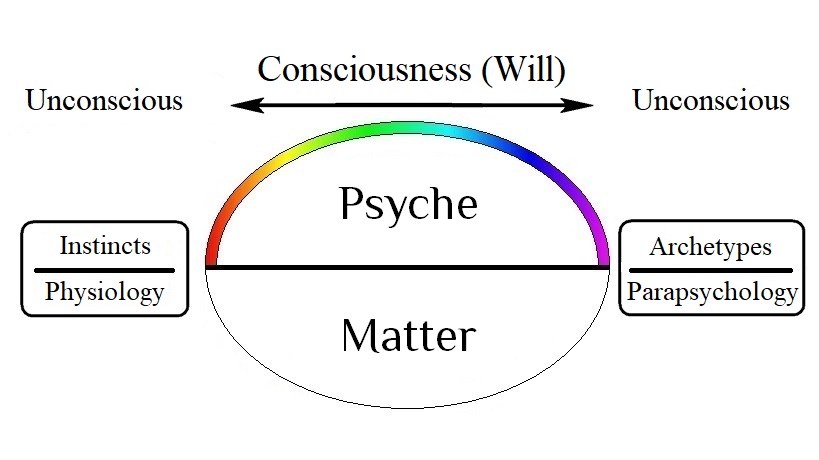
The break with Freud was a turning point in Jung’s career. He rejected Freud’s emphasis on infantile sexuality as the primary driver of human behavior. Jung believed that the unconscious contained not only repressed personal experiences but also a collective unconscious, a universal reservoir of ancestral memories and archetypes shared by all humanity.
Key Concepts in Jungian Psychology
Jung’s analytical psychology is characterized by several core concepts that distinguish it from Freudian psychoanalysis:
- The Collective Unconscious: A universal and inherited layer of the unconscious, containing archetypes and primordial images.
- Archetypes: Universal, symbolic patterns of behavior and thought, such as the Mother, the Hero, and the Shadow.
- Individuation: The process of psychological differentiation, involving the integration of conscious and unconscious aspects of the personality to achieve wholeness.
- Psychological Types: Jung identified distinct psychological types based on the interplay of introversion and extraversion, as well as four functions: thinking, feeling, sensation, and intuition.
- The Shadow: The unconscious aspect of the personality that the conscious ego does not identify in itself. Because it is unconscious, it is difficult to know.
Jung’s Later Life and Legacy
Following his break with Freud, Jung embarked on a period of intense self-exploration and inner work. He documented his experiences in “The Red Book,” a private journal filled with vivid imagery and symbolic narratives. This period of self-analysis led to the further development of his psychological theories.
Jung continued to write and lecture extensively throughout his life, leaving behind a vast body of work that continues to influence psychology, literature, art, and religious studies. His ideas have resonated with individuals seeking meaning and purpose in their lives, and his therapeutic approach has helped countless people to achieve greater self-understanding and psychological integration.
Influence on Modern Thought
Carl Jung’s impact extends far beyond the field of psychology. His concepts have been adopted and adapted in various disciplines, including:
- Literature: Jungian archetypes are frequently used in literary analysis to explore themes of identity, transformation, and the human condition.
- Art: Artists have drawn inspiration from Jung’s theories on symbolism and the unconscious to create works that explore the depths of the human psyche.
- Religious Studies: Jung’s work has shed light on the psychological significance of religious symbols and myths, providing a deeper understanding of the human spiritual experience.
If you want a practical next step, you can also check out Heal your past, design your future.
If you want a practical next step, you can also check out Become an Ultimate Master of your life.


 UACE UNEB SAMPLE PAPERS 2026Advanced Secondary
  ADVANCED LEVEL BIOLOGY, NEW CURRICULUM, SENIOR FIVEAdvanced Secondary,Biology
  Command Your Timeline: Heal the Past, Design Your FutureIntelligence,Skills Development
  SHAPTA MOCKS 2024
 Ultimate Me: Unlock Your Ultimate Potential & Energy HealingIntelligence,Skills Development
 What is ChatGPT?General
 Digital Literacy in Uganda: Why Schools Are Falling BehindGeneral
 Elderberry: The Wildcrafted Herb That Heals NaturallyGeneral
 Turmeric: The Golden Herb That Heals From the Inside OutGeneral
 Turmeric: The Golden Herb That Heals From the Inside OutGeneral
 Closing the Skills Gap: How Industry-Led Skilling Shapes Your FutureGeneral
 Turmeric: The Golden Herb That Heals From the Inside OutGeneral
 Turmeric: The Golden Herb That Heals From the Inside OutGeneral
- BookTok’s Hidden Power: How Readers Are Rewriting Their LivesGeneral
 Susan Grau: Trapped in a Freezer at 4 — Her NDE Changed EverythingGeneral
 How Uganda Students Can Master Exams & Transform Their LearningGeneral
 KAKURU BENARDSample Activity of Integration on Forests, Forest resources and Forestry in Africa
- KAKURU BENARDSample Activity of Integration on Trade within and outside East Africa
 Babirye SandraO-LEVEL ENTREPRENUERSHIP,PETTY CASHBOOK ASSIGNMENT
- Babirye SandraO-LEVEL ENTREPRENUERSHIP,PETTY CASHBOOK ASSIGNMENT
- Babirye SandraO-LEVEL ENTREPRENUERSHIP,PETTY CASHBOOK ASSIGNMENT
0 responses on "Profile: Carl Jung — Life, Ideas, Teachings & Global Influence"