
Carl Jung: A Biographical Sketch
Full Name: Carl Gustav Jung
Lifespan: July 26, 1875 – June 6, 1961
Origin: Swiss
Core Disciplines: Psychiatry, Psychology, Analytical Psychology

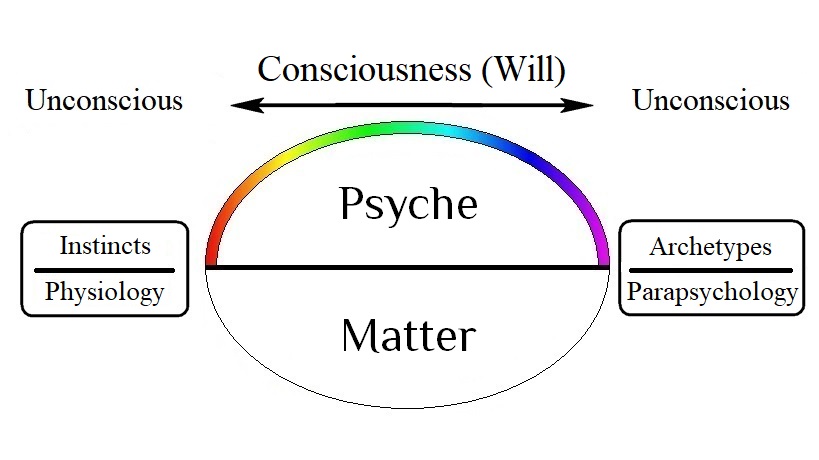
Global Impact: Carl Jung stands as a transformative figure in psychiatry and the architect of analytical psychology. His work has resonated far beyond the confines of psychology, leaving an indelible mark on religion, literature, the arts, and broader cultural understanding. Jung’s groundbreaking concepts, including the collective unconscious, archetypes, and the process of individuation, provide profound perspectives on the human psyche and the journey toward self-realization.
The Genesis of a Mind: Early Life and Influences
Born in Kesswil, Switzerland, Carl Jung’s upbringing was steeped in intellectual and spiritual currents. His father, Paul Achilles Jung, served as a pastor in the Swiss Reformed Church, while his mother, Emilie Preiswerk Jung, came from a family with deep roots in theology and mysticism. This environment exposed Jung to a tapestry of religious and philosophical thought from his earliest years.
As a child, Jung was introspective and often preferred solitude, experiencing vivid dreams that fueled his imagination. He cultivated a rich inner world, which he later identified as a wellspring of profound psychological understanding. A defining moment in his childhood involved carving a small figure into a pencil box and concealing it. This secret act nurtured his sense of individuality and his connection to the unconscious realm.
Initially drawn to archaeology and philology, Jung considered pursuing studies in these fields, reflecting his fascination with history and the power of symbols. However, due to financial limitations, he ultimately chose medicine at the University of Basel, a decision that would shape his future career.
Early Career and Association with Sigmund Freud
Jung’s medical training led him to psychiatry, where he found a field that resonated with his intellectual and spiritual inclinations. He began his psychiatric career at the Burghölzli mental hospital in Zurich, where he worked under Eugen Bleuler, a pioneer in the study of schizophrenia. Bleuler’s work on the disorder, which he termed “schizophrenia,” had a profound influence on Jung, who became deeply involved in researching and treating mental illness.
In the early 1900s, Jung became acquainted with Sigmund Freud’s work on psychoanalysis. He was captivated by Freud’s theories about the unconscious mind and the role of sexuality in human behavior. The two men began a close correspondence and eventually met in person in 1907. Their intellectual connection was immediate and intense, and Jung quickly became Freud’s protégé and heir apparent in the psychoanalytic movement.
The Freud-Jung Partnership and Divergence
For several years, Jung worked closely with Freud, promoting and expanding psychoanalytic theory. He became the first president of the International Psychoanalytical Association in 1910. However, their relationship began to unravel as Jung developed his own distinct ideas that diverged from Freud’s core principles. The central point of contention was Jung’s concept of the collective unconscious, which Freud rejected. Jung believed that the unconscious mind contained not only personal repressed memories but also universal, inherited archetypes that influenced human behavior and experience. This disagreement, along with other theoretical and personal differences, led to a painful and irreparable split between the two men in 1913.
The Development of Analytical Psychology
After his break with Freud, Jung embarked on a period of intense self-exploration and intellectual development. This period, often referred to as his “confrontation with the unconscious,” was a time of profound personal and professional transformation. He delved deeply into his own dreams, fantasies, and active imaginations, seeking to understand the symbolic language of the unconscious mind. This process led him to develop his own unique system of psychology, which he called “analytical psychology.”
Key Concepts in Jungian Psychology
Analytical psychology is characterized by several key concepts:
- The Collective Unconscious: A universal layer of the unconscious mind containing inherited archetypes and patterns of behavior common to all humanity.
- Archetypes: Universal, primordial images and patterns of behavior that reside in the collective unconscious, such as the Mother, the Father, the Hero, and the Shadow.
- Individuation: The process of psychological integration and self-realization, involving the conscious assimilation of unconscious contents and the development of a unique and authentic self.
- The Persona: The social mask or public image that individuals present to the world, which can sometimes obscure their true selves.
- The Shadow: The repressed and unconscious aspects of the personality, including negative traits and instincts that individuals tend to deny or project onto others.
- The Anima and Animus: The contrasexual aspects of the personality, with the anima representing the feminine side of the male psyche and the animus representing the masculine side of the female psyche.
Jung’s Later Life and Legacy
Throughout his later life, Jung continued to refine and expand his theories, writing extensively on a wide range of topics, including alchemy, mythology, religion, and the psychology of art. He traveled extensively, studying different cultures and seeking to understand the universal patterns of human experience. Jung’s work has had a profound influence on a wide range of fields, including psychology, literature, art, religion, and popular culture. His ideas continue to be relevant and influential in the 21st century, offering valuable insights into the complexities of the human psyche and the path to self-discovery.
Jung died in Zurich on June 6, 1961, leaving behind a rich and enduring legacy. His work continues to inspire and challenge individuals to explore the depths of their own unconscious minds and to embark on the journey of individuation, seeking to become more whole and authentic human beings.
If you want a practical next step, you can also check out Heal your past, design your future.
If you want a practical next step, you can also check out Become an Ultimate Master of your life.


 UACE UNEB SAMPLE PAPERS 2026Advanced Secondary
  ADVANCED LEVEL BIOLOGY, NEW CURRICULUM, SENIOR FIVEAdvanced Secondary,Biology
  Command Your Timeline: Heal the Past, Design Your FutureIntelligence,Skills Development
  SHAPTA MOCKS 2024
 Ultimate Me: Unlock Your Ultimate Potential & Energy HealingIntelligence,Skills Development
 What is ChatGPT?General
 Digital Literacy in Uganda: Why Schools Are Falling BehindGeneral
 Elderberry: The Wildcrafted Herb That Heals NaturallyGeneral
 Turmeric: The Golden Herb That Heals From the Inside OutGeneral
 Turmeric: The Golden Herb That Heals From the Inside OutGeneral
 Closing the Skills Gap: How Industry-Led Skilling Shapes Your FutureGeneral
 Turmeric: The Golden Herb That Heals From the Inside OutGeneral
 Turmeric: The Golden Herb That Heals From the Inside OutGeneral
- BookTok’s Hidden Power: How Readers Are Rewriting Their LivesGeneral
 Susan Grau: Trapped in a Freezer at 4 — Her NDE Changed EverythingGeneral
 How Uganda Students Can Master Exams & Transform Their LearningGeneral
 KAKURU BENARDSample Activity of Integration on Forests, Forest resources and Forestry in Africa
- KAKURU BENARDSample Activity of Integration on Trade within and outside East Africa
 Babirye SandraO-LEVEL ENTREPRENUERSHIP,PETTY CASHBOOK ASSIGNMENT
- Babirye SandraO-LEVEL ENTREPRENUERSHIP,PETTY CASHBOOK ASSIGNMENT
- Babirye SandraO-LEVEL ENTREPRENUERSHIP,PETTY CASHBOOK ASSIGNMENT
0 responses on "Profile: Carl Jung — Life, Ideas, Teachings & Global Influence"