
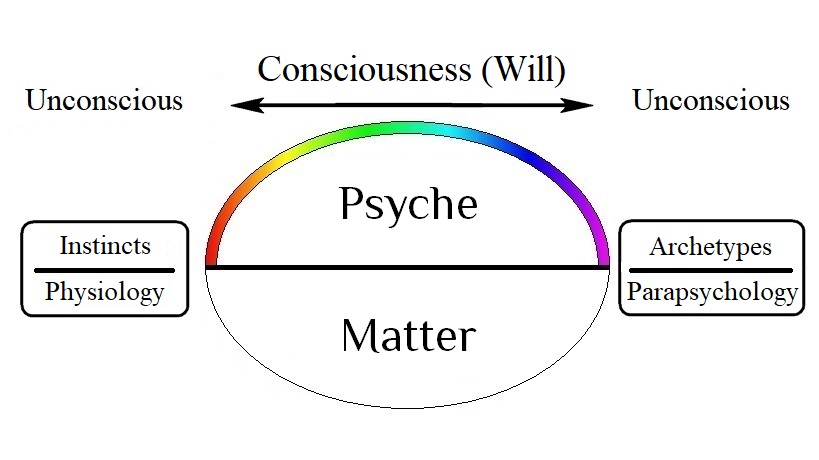
1. Jung in Brief
Official Name: Carl Gustav Jung
Lifespan: 1875–1961
Origin: Swiss
Area of Expertise: Psychiatry, psychology, analytical psychology

Global Impact: Carl Jung, a Swiss psychiatrist and the founder of analytical psychology, left an indelible mark not just on psychiatry, but also on diverse fields like anthropology, archaeology, literature, philosophy, and religious studies. He is celebrated for groundbreaking concepts such as the collective unconscious, archetypes, psychological types, and synchronicity. Jung’s insights continue to profoundly shape our understanding of the human psyche and its journey toward self-realization.
2. The Formative Years
Born in Kesswil, Switzerland, on July 26, 1875, Carl Jung was the son of Paul Achilles Jung, a pastor, and Emilie Preiswerk Jung. His lineage was deeply rooted in both religious and scholarly pursuits. His paternal grandfather, also named Carl Jung, was a respected physician and the rector of the University of Basel. On his mother’s side, his grandfather was a theologian and a scholar of Hebrew.
Jung’s childhood was characterized by feelings of solitude and a tendency towards introspection. He often described himself as a loner, finding solace in his inner world. From an early age, he experienced intense dreams and visions, which he later came to understand as expressions of the unconscious. These early experiences played a crucial role in shaping his later theories about the unconscious mind and its influence on human behavior.
Jung’s intellectual curiosity was evident from a young age. He was drawn to philosophy, mythology, and religion, seeking to understand the deeper meaning of human existence. This quest for understanding would ultimately lead him to develop his unique approach to psychology, one that emphasized the importance of the unconscious and the individual’s search for wholeness.
3. Key Concepts of Analytical Psychology
Jung’s analytical psychology diverges from Freudian psychoanalysis in several key aspects. While Freud emphasized the role of repressed sexual desires, Jung broadened the scope of the unconscious to include a collective dimension.
3.1. The Collective Unconscious
The collective unconscious, perhaps Jung’s most revolutionary concept, refers to a universal layer of the unconscious mind shared by all humanity. It contains archetypes, which are universal, primordial images and patterns of behavior.
3.2. Archetypes
Archetypes are inherited predispositions to respond to certain experiences in a similar way. Examples include the Mother archetype, the Hero archetype, the Shadow archetype, and the Self archetype. These archetypes manifest in myths, dreams, and symbols across cultures.
3.3. Psychological Types
Jung also developed a theory of psychological types, based on two attitudes (introversion and extraversion) and four functions (thinking, feeling, sensation, and intuition). These types provide a framework for understanding individual differences in personality and behavior.
4. Jung’s Relationship with Freud
Jung initially admired Sigmund Freud and became a close collaborator, even being considered Freud’s heir apparent. However, their differing views on the nature of the unconscious and the role of sexuality eventually led to a bitter split.
The break with Freud was a painful but ultimately liberating experience for Jung. It allowed him to develop his own unique approach to psychology, free from the constraints of Freudian orthodoxy.
5. Jung’s Later Life and Legacy
In his later years, Jung continued to write and lecture, expanding his theories and exploring new areas of interest, such as alchemy and synchronicity. He died on June 6, 1961, in Küsnacht, Switzerland.
Jung’s legacy continues to inspire and influence scholars, therapists, and individuals seeking a deeper understanding of themselves and the human condition. His work remains relevant in a world increasingly focused on self-discovery and personal growth.
6. Major Works
- Psychological Types (1921)
- Modern Man in Search of a Soul (1933)
- The Archetypes and the Collective Unconscious (1968)
- Memories, Dreams, Reflections (1963)
7. Influence Beyond Psychology
Jung’s influence extends far beyond the realm of psychology. His ideas have resonated with artists, writers, theologians, and scholars in various fields. His concepts of archetypes and the collective unconscious have been particularly influential in literature and film.
His work also has had a notable impact on religious studies, particularly in the understanding of symbolism and mythology.
8. Criticism and Controversies
Despite his widespread influence, Jung’s work has also faced criticism. Some critics argue that his theories are too abstract and difficult to empirically validate. Others have raised concerns about his alleged sympathies with Nazism during the 1930s, although these allegations have been widely debated and disputed.
If you want a practical next step, you can also check out Heal your past, design your future.
If you want a practical next step, you can also check out Become an Ultimate Master of your life.


 UACE UNEB SAMPLE PAPERS 2026Advanced Secondary
  ADVANCED LEVEL BIOLOGY, NEW CURRICULUM, SENIOR FIVEAdvanced Secondary,Biology
  Command Your Timeline: Heal the Past, Design Your FutureIntelligence,Skills Development
  SHAPTA MOCKS 2024
 Ultimate Me: Unlock Your Ultimate Potential & Energy HealingIntelligence,Skills Development
 What is ChatGPT?General
 Elderberry: The Wildcrafted Herb That Fights Illness NaturallyGeneral
 Elderberry: The Wildcrafted Herb That Heals NaturallyGeneral
 Friday Shutdown Routine That Replaced My Sunday Reset for GoodGeneral
 Turmeric: The Golden Herb That Heals From the Inside OutGeneral
 Turmeric: The Golden Herb That Heals From the Inside OutGeneral
 Best Free AI Voice Tools Available Right Now in 2025General
 Minecraft Quests & Ugandan Curriculum: Learn Through GamingGeneral
- Uganda Schools on the Brink: The Human Cost of Aid Cuts 2026General
 CapCut AI Ad Test: Is It Fast or Just Flashy?General
 Turmeric: The Golden Herb That Heals From the Inside OutGeneral
 KAKURU BENARDSample Activity of Integration on Forests, Forest resources and Forestry in Africa
- KAKURU BENARDSample Activity of Integration on Trade within and outside East Africa
 Babirye SandraO-LEVEL ENTREPRENUERSHIP,PETTY CASHBOOK ASSIGNMENT
- Babirye SandraO-LEVEL ENTREPRENUERSHIP,PETTY CASHBOOK ASSIGNMENT
- Babirye SandraO-LEVEL ENTREPRENUERSHIP,PETTY CASHBOOK ASSIGNMENT
0 responses on "Profile: Carl Jung — Life, Ideas, Teachings & Global Influence"