

Uganda’s Future Hinges on STEM: A Call to Action
Kampala, Uganda – In a world increasingly driven by technological advancements, Uganda stands at a crucial juncture. While the nation possesses immense potential, its ability to compete on the global stage and achieve sustainable development hinges on a robust Science, Technology, Engineering, and Mathematics (STEM) education system. This article presents a fresh perspective on how Uganda can revolutionize its STEM landscape, moving beyond traditional approaches to cultivate a generation of innovators and problem-solvers.
The Current STEM Landscape: Challenges and Opportunities
Uganda’s education system integrates STEM subjects across all levels. However, significant disparities exist in the quality and effectiveness of STEM instruction. Consider the story of Sarah, a bright student from a rural village. Despite her aptitude for mathematics, her school lacks a functional science lab, hindering her ability to grasp key concepts through hands-on experiments. This scenario highlights several key challenges:
- Teacher Empowerment: Many teachers, especially in rural areas, lack the specialized training and resources needed to deliver engaging STEM lessons. Imagine a teacher struggling to explain the principles of physics without access to basic equipment like a simple pulley system.
- Resource Constraints: Limited funding for schools, particularly in the public sector, restricts access to essential resources such as laboratory equipment, computers, and updated textbooks. This creates a significant disadvantage for students in underserved communities.
- Curriculum Modernization: The current STEM curriculum often emphasizes rote memorization over critical thinking and problem-solving skills. Students may be able to recite formulas but struggle to apply them to real-world scenarios.
A Bold New Approach to STEM Education
To unlock Uganda’s potential, a transformative approach to STEM education is needed. This requires a collaborative effort involving government, educators, the private sector, and community organizations. Key strategies include:
- Investing in Teacher Excellence: Providing comprehensive professional development programs for STEM teachers, focusing on innovative teaching methodologies, subject matter expertise, and the integration of technology. For example, workshops could be organized to train teachers on how to use readily available materials to conduct engaging science experiments.
- Creating Resource-Rich Learning Environments: Increasing funding for schools, particularly in underserved areas, to ensure access to well-equipped laboratories, modern equipment, and updated learning materials. Prioritizing the development of locally relevant and affordable STEM resources.
- Reimagining the Curriculum: Aligning the STEM curriculum with industry needs and global trends, emphasizing hands-on learning, project-based activities, and the development of critical thinking and problem-solving skills. Incorporating real-world case studies and examples to illustrate the relevance of STEM concepts. For instance, students could be tasked with designing a sustainable water filtration system for their community.
Harnessing the Power of Technology and Innovation
Technology and innovation are essential for transforming STEM education in Uganda. Leveraging digital tools, online resources, and innovative teaching methodologies can enhance student engagement, improve learning outcomes, and bridge the resource gap. Consider these initiatives:

- Interactive E-Learning Platforms: Developing online platforms that offer interactive STEM courses, tutorials, and simulations, accessible to students across the country.
- Mobile Learning Initiatives: Utilizing mobile devices to deliver STEM content and facilitate collaborative learning, particularly in areas with limited internet access.
- Coding and Robotics Programs: Introducing students to coding and robotics at an early age to foster computational thinking and problem-solving skills. Imagine a program where students learn to build and program robots to solve real-world problems in their communities.
Overcoming Obstacles and Ensuring Equitable Access
While the vision for a transformed STEM education system is compelling, several challenges must be addressed to ensure its successful implementation.
Promoting Equity and Inclusion
Addressing disparities in access to quality STEM education between urban and rural areas, as well as among different socioeconomic groups, is crucial. Initiatives to promote equity and inclusion are essential to ensure that all students have the opportunity to pursue STEM education.
- Mentorship programs and role models to inspire girls’ participation in STEM.
- Assistive technologies and inclusive learning environments for students with disabilities.
- Targeted scholarship programs and financial aid for students from disadvantaged backgrounds.
Strengthening Infrastructure and Resources
Many schools in Uganda require significant investment in infrastructure and resources to support effective STEM education. Overcrowded classrooms, limited access to laboratories and equipment, and a shortage of textbooks and other learning materials pose significant challenges.
- Prioritizing infrastructure development to create conducive learning environments.
- Providing schools with the necessary equipment and resources to conduct hands-on experiments and projects.
- Promoting the use of open educational resources (OER) to supplement traditional textbooks and reduce costs.
Empowering Teachers Through Continuous Development
The quality of STEM education is directly linked to the competence and motivation of teachers. Continuous professional development is essential to equip teachers with the knowledge, skills, and pedagogical approaches needed to effectively teach STEM subjects.
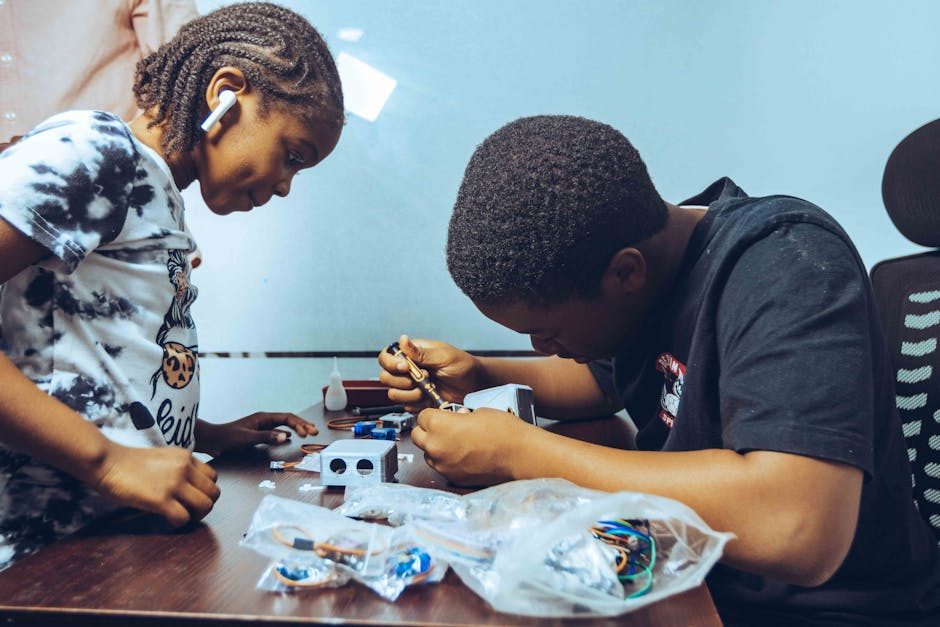
- Establishing ongoing professional development opportunities for STEM teachers, focusing on innovative teaching methods and subject matter expertise.
- Creating collaborative learning communities where teachers can share best practices and support each other.
- Incentivizing teachers to pursue advanced degrees and certifications in STEM fields.
Modernizing the Curriculum and Assessment Methods
The STEM curriculum in Uganda must be aligned with the needs of the 21st-century workforce, emphasizing critical thinking, problem-solving, and creativity. Assessment methods should be reformed to measure students’ ability to apply their knowledge and skills to real-world problems.
- Revising the curriculum to incorporate more hands-on activities, project-based learning, and real-world case studies.
- Implementing assessment methods that evaluate students’ critical thinking, problem-solving, and creativity skills.
If you want a practical next step, you can also check out Heal your past, design your future.
If you want a practical next step, you can also check out Become an Ultimate Master of your life.


 ADVANCED LEVEL BIOLOGY, NEW CURRICULUM, SENIOR FIVEAdvanced Secondary,Biology
  Command Your Timeline: Heal the Past, Design Your FutureIntelligence,Skills Development
  SHAPTA MOCKS 2024
 Ultimate Me: Unlock Your Ultimate Potential & Energy HealingIntelligence,Skills Development
  NLSC: SENIOR THREE AGRICULTUREAgriculture,New Lower Secondary Curriculum,Ordinary Secondary
 What is ChatGPT?General
- Bridging the Digital Divide: Uganda’s Education Revolution Through Digital Literacy and Teacher TrainingGeneral
 Uganda’s Digital Leap: Transforming Primary Education Through TechnologyGeneral
- Uganda’s Education Renaissance: Combating Learning Loss and Empowering EducatorsGeneral
 The Art of the Subjective: Exploring the Nuances of Book ReviewingGeneral
 Crafting the Perfect Book Review: A Guide for Aspiring CriticsGeneral
 Unveiling the Layers: A Deep Dive into Book Reviewing Beyond Plot SummariesGeneral
 The Art of the Book Review: Beyond Summary, Towards Deeper ConnectionGeneral
 The Art of Crafting a Compelling Book Review: Beyond Summary and CritiqueGeneral
 Crafting Compelling Book Reviews: Beyond Summary, Towards InfluenceGeneral
- The Quintessential Watch Collection: A 30-Year Journey and Lessons for Ugandan LearnersGeneral
 KAKURU BENARDSample Activity of Integration on Forests, Forest resources and Forestry in Africa
- KAKURU BENARDSample Activity of Integration on Trade within and outside East Africa
 Babirye SandraO-LEVEL ENTREPRENUERSHIP,PETTY CASHBOOK ASSIGNMENT
- Babirye SandraO-LEVEL ENTREPRENUERSHIP,PETTY CASHBOOK ASSIGNMENT
- Babirye SandraO-LEVEL ENTREPRENUERSHIP,PETTY CASHBOOK ASSIGNMENT

0 responses on "Uganda Education: Bridging the STEM Skills Gap for National Development"