

Uganda’s Educational Renaissance: A Shift Towards Skills and Opportunity
Kampala, Uganda – A wave of change is sweeping through Uganda’s education system, moving beyond rote memorization towards a more holistic approach. For years, the focus on standardized tests like the Primary Leaving Examination (PLE), Uganda Certificate of Education (UCE), and Uganda Advanced Certificate of Education (UACE) overshadowed the development of critical thinking and practical abilities. Now, a renewed commitment to cultivating well-rounded individuals is taking hold, promising to equip Ugandan students with the skills needed to thrive in a rapidly changing world.
Beyond the Exam: Cultivating Practical Skills for a Brighter Future
While academic achievement remains important, the emphasis is shifting towards developing skills that are directly applicable to real-world challenges. This includes fostering creativity, collaboration, communication, and problem-solving abilities.
Imagine a student learning about agriculture not just from a textbook, but by designing and managing a small-scale farm at their school. Or students learning coding skills to create apps that address local community needs. These are the kinds of experiences that are becoming increasingly prevalent in Ugandan classrooms.
Innovative Teaching Methodologies in Ugandan Schools
Educators are embracing new approaches to engage students and promote deeper learning:
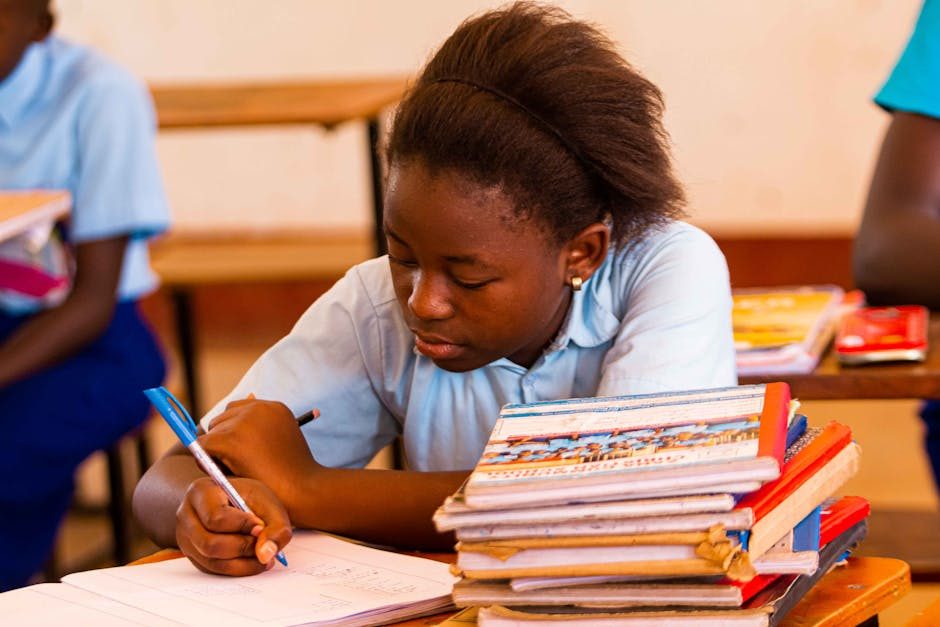
- Project-Based Learning: Students work on extended projects that require them to apply their knowledge and skills to solve real-world problems.
- Inquiry-Based Learning: Students are encouraged to ask questions, explore topics of interest, and conduct their own research.
- Collaborative Learning: Students work together in groups to share ideas, solve problems, and learn from each other.
- Experiential Learning: Students learn through hands-on activities, field trips, and simulations. For example, a geography lesson might involve a field trip to a nearby landmark.
Addressing Systemic Challenges and Expanding Access
Despite progress, significant hurdles remain in ensuring equitable access to quality education across Uganda:
- Resource Scarcity: Many schools, especially in rural areas, still lack essential resources like textbooks, computers, and trained teachers.
- Overcrowding: Large class sizes make it difficult for teachers to provide individualized attention to students.
- Socioeconomic Barriers: Poverty and inequality continue to limit access to education for many Ugandan children.
- Geographic Disparities: Educational opportunities vary significantly between urban and rural areas.
Leveraging Technology to Bridge the Gap
Technology offers a powerful tool for overcoming these challenges and expanding access to quality education. Online learning platforms, mobile apps, and digital resources can provide students with access to a wealth of information and learning opportunities, regardless of their location or socioeconomic background.
Consider the impact of providing tablets pre-loaded with educational content to students in remote villages, or using online platforms to connect students with qualified teachers from other parts of the country.
A Vision for the Future: Empowering Uganda’s Next Generation
The future of education in Uganda depends on continued investment in innovation, access, and equity. By embracing new teaching methodologies, leveraging technology, and addressing systemic challenges, Uganda can create an education system that empowers its students to become critical thinkers, problem-solvers, and leaders.

Ultimately, the goal is to equip Ugandan students with the skills and knowledge they need to build a brighter future for themselves, their communities, and their country.
If you want a practical next step, you can also check out Heal your past, design your future.
If you want a practical next step, you can also check out Become an Ultimate Master of your life.


 UACE UNEB SAMPLE PAPERS 2026Advanced Secondary
  ADVANCED LEVEL BIOLOGY, NEW CURRICULUM, SENIOR FIVEAdvanced Secondary,Biology
  Command Your Timeline: Heal the Past, Design Your FutureIntelligence,Skills Development
  SHAPTA MOCKS 2024
 Ultimate Me: Unlock Your Ultimate Potential & Energy HealingIntelligence,Skills Development
 What is ChatGPT?General
 Digital Literacy in Uganda: Why Schools Are Falling BehindGeneral
 Elderberry: The Wildcrafted Herb That Heals NaturallyGeneral
 Turmeric: The Golden Herb That Heals From the Inside OutGeneral
 Turmeric: The Golden Herb That Heals From the Inside OutGeneral
 Closing the Skills Gap: How Industry-Led Skilling Shapes Your FutureGeneral
 Turmeric: The Golden Herb That Heals From the Inside OutGeneral
 Turmeric: The Golden Herb That Heals From the Inside OutGeneral
- BookTok’s Hidden Power: How Readers Are Rewriting Their LivesGeneral
 Susan Grau: Trapped in a Freezer at 4 — Her NDE Changed EverythingGeneral
 How Uganda Students Can Master Exams & Transform Their LearningGeneral
 KAKURU BENARDSample Activity of Integration on Forests, Forest resources and Forestry in Africa
- KAKURU BENARDSample Activity of Integration on Trade within and outside East Africa
 Babirye SandraO-LEVEL ENTREPRENUERSHIP,PETTY CASHBOOK ASSIGNMENT
- Babirye SandraO-LEVEL ENTREPRENUERSHIP,PETTY CASHBOOK ASSIGNMENT
- Babirye SandraO-LEVEL ENTREPRENUERSHIP,PETTY CASHBOOK ASSIGNMENT
0 responses on "Uganda's Education System: Beyond Memorization, Towards Holistic Learning and Exam Success"