

1. Carl Jung: At a Glance
Full Name: Carl Gustav Jung
Life Span: July 26, 1875 – June 6, 1961
Origin: Switzerland
Area of Focus: Psychiatry, Psychology, Analytical Psychology
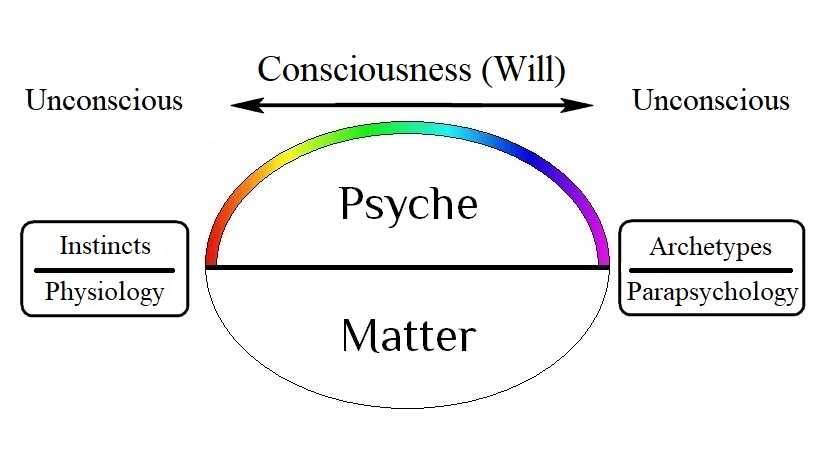
Global Significance: Carl Jung, a Swiss psychiatrist and the founder of analytical psychology, left an indelible mark on the world. His exploration of the human psyche, including groundbreaking concepts such as the collective unconscious, archetypes, and psychological types, has had a profound and lasting impact on diverse fields, from psychology and literature to art and religious studies.
2. The Genesis of a Mind: Early Life and Influences
Born in Kesswil, Switzerland, Carl Jung’s upbringing was deeply rooted in religious and intellectual pursuits. His father, Paul Achilles Jung, served as a pastor, and his mother, Emilie Preiswerk Jung, came from a family with a strong tradition of clergy and scholarship. This environment cultivated Jung’s early fascination with religion, philosophy, and the enigmatic workings of the human mind.
As a child, Jung exhibited a tendency towards solitude, introspection, and vivid dreaming. He cultivated a rich inner world, which he later recognized as a precursor to his later psychological insights. He began his education in Basel, initially considering archaeology or philology before ultimately pursuing medicine and specializing in psychiatry.
A turning point in Jung’s intellectual development was his encounter with the writings of Sigmund Freud. Freud’s theories regarding the unconscious resonated strongly with Jung.

3. Collaboration and Divergence: Jung and Freud
Jung’s engagement with Freud’s psychoanalytic theories led to a period of intense collaboration. He became a prominent figure in the psychoanalytic movement, even serving as the first president of the International Psychoanalytic Association.
However, fundamental differences in their perspectives eventually led to a schism between Jung and Freud. Jung increasingly questioned Freud’s emphasis on sexuality as the primary driver of human behavior and began to develop his own unique theories.
3.1. Key Differences in Theories
The divergence between Jung and Freud centered on several key points:
- The Nature of the Unconscious: Jung expanded the concept of the unconscious beyond Freud’s personal unconscious to include the collective unconscious, a universal reservoir of archetypes and inherited predispositions.
- Libido: Jung viewed libido not solely as sexual energy, but as a more generalized psychic energy that encompasses various drives and motivations.
- The Role of Spirituality: Jung integrated spirituality and religious symbolism into his psychological framework, a perspective that differed significantly from Freud’s more secular approach.
4. Analytical Psychology: Core Concepts
Following his break with Freud, Jung developed his own school of thought, known as analytical psychology. This approach emphasizes the importance of understanding the individual’s unique psyche and the process of individuation.
4.1. The Collective Unconscious and Archetypes
A cornerstone of Jung’s theory is the collective unconscious, a shared, universal layer of the unconscious mind that contains archetypes – universal patterns of behavior and imagery.
Examples of archetypes include:
- The Persona: The social mask or role that individuals present to the world.
- The Shadow: The repressed, darker aspects of the personality.
- The Anima/Animus: The contrasexual aspects of the personality (anima in men, animus in women).
- The Self: The central archetype representing wholeness and integration of the personality.
4.2. Psychological Types
Jung also developed a theory of psychological types based on two primary attitudes (introversion and extraversion) and four functions (thinking, feeling, sensation, and intuition). These combinations result in eight distinct psychological types, providing a framework for understanding individual differences in personality and behavior.
5. Jung’s Impact and Legacy
Carl Jung’s ideas have had a profound and lasting impact on various fields:
- Psychology: His theories have influenced personality psychology, developmental psychology, and psychotherapy.
- Literature and Art: Jungian concepts have been widely used in literary analysis and art interpretation.
- Religious Studies: His exploration of religious symbolism and mythology has contributed to the understanding of religious experience.
- Popular Culture: Jungian archetypes and concepts have permeated popular culture, appearing in films, books, and video games.
Jung’s work continues to be studied and debated, solidifying his position as one of the most influential figures in the history of psychology.
If you want a practical next step, you can also check out Heal your past, design your future.
If you want a practical next step, you can also check out Become an Ultimate Master of your life.


 ADVANCED LEVEL BIOLOGY, NEW CURRICULUM, SENIOR FIVEAdvanced Secondary,Biology
  Command Your Timeline: Heal the Past, Design Your FutureIntelligence,Skills Development
  SHAPTA MOCKS 2024
 Ultimate Me: Unlock Your Ultimate Potential & Energy HealingIntelligence,Skills Development
  NLSC: SENIOR THREE AGRICULTUREAgriculture,New Lower Secondary Curriculum,Ordinary Secondary
 What is ChatGPT?General
 Elderberry: The Wildcrafted Herb That Fights Illness NaturallyGeneral
 Elderberry: The Wildcrafted Herb That Heals NaturallyGeneral
 Friday Shutdown Routine That Replaced My Sunday Reset for GoodGeneral
 Turmeric: The Golden Herb That Heals From the Inside OutGeneral
 Turmeric: The Golden Herb That Heals From the Inside OutGeneral
 Best Free AI Voice Tools Available Right Now in 2025General
 Minecraft Quests & Ugandan Curriculum: Learn Through GamingGeneral
- Uganda Schools on the Brink: The Human Cost of Aid Cuts 2026General
 CapCut AI Ad Test: Is It Fast or Just Flashy?General
 Turmeric: The Golden Herb That Heals From the Inside OutGeneral
 KAKURU BENARDSample Activity of Integration on Forests, Forest resources and Forestry in Africa
- KAKURU BENARDSample Activity of Integration on Trade within and outside East Africa
 Babirye SandraO-LEVEL ENTREPRENUERSHIP,PETTY CASHBOOK ASSIGNMENT
- Babirye SandraO-LEVEL ENTREPRENUERSHIP,PETTY CASHBOOK ASSIGNMENT
- Babirye SandraO-LEVEL ENTREPRENUERSHIP,PETTY CASHBOOK ASSIGNMENT
0 responses on "Carl Jung — Life, Ideas, Teachings & Global Influence"