

Most people chasing AI literacy are solving the wrong problem — and that mistake could cost them far more than they realize over the next decade.
- Core Insights:
- AI readiness is rooted in cognitive agility, not software familiarity.
- The professionals who thrive will be those who direct AI with precision, not those who merely operate it.
- Proactive reskilling is now a baseline expectation, not an optional upgrade.
- Human judgment, contextual awareness, and interpersonal intelligence remain irreplaceable assets.
- Structured thinking and disciplined questioning are the competencies that separate high-value AI users from average ones.
The Misconception Quietly Undermining Careers
Across industries and academic institutions, a flawed consensus has taken hold: that AI competency is primarily about knowing which platforms exist and how to navigate their interfaces. Leadership educator Mark Boccia, Ed.D, has challenged this view directly, arguing that the real deficiency is not tool awareness but intellectual infrastructure — the capacity to ask precise questions, critically assess machine-generated outputs, and exercise human judgment in situations where algorithms are structurally limited.
This distinction is not semantic. The World Economic Forum’s Future of Jobs Report 2025 forecasts that over 40% of foundational job skills will transform within five years. Yet corporate training budgets continue to favor software walkthroughs over the development of analytical depth and strategic reasoning. Consider a junior consultant who can open five different AI platforms but cannot identify when a generated market analysis contains faulty assumptions — that person is not AI-literate in any meaningful sense. The gap is cognitive, and closing it requires a fundamentally different approach to learning.
- Interface training without critical evaluation skills produces users who amplify AI errors rather than catch them.
- Professionals who interrogate outputs using domain expertise consistently deliver superior results compared to passive AI consumers.
- Companies that build reasoning capacity alongside tool adoption demonstrate stronger long-term performance outcomes.
When Cognitive Depth Becomes the Competitive Advantage
The instinct to master the latest AI platform is understandable but strategically shortsighted. Platforms are replaced, updated, and deprecated on timelines that no individual can reliably predict. What remains constant is the value of thinking clearly, formulating precise inquiries, and knowing when machine output deserves trust versus when it demands scrutiny. These capabilities function as force multipliers — they make every tool more effective in the hands of the person using them.
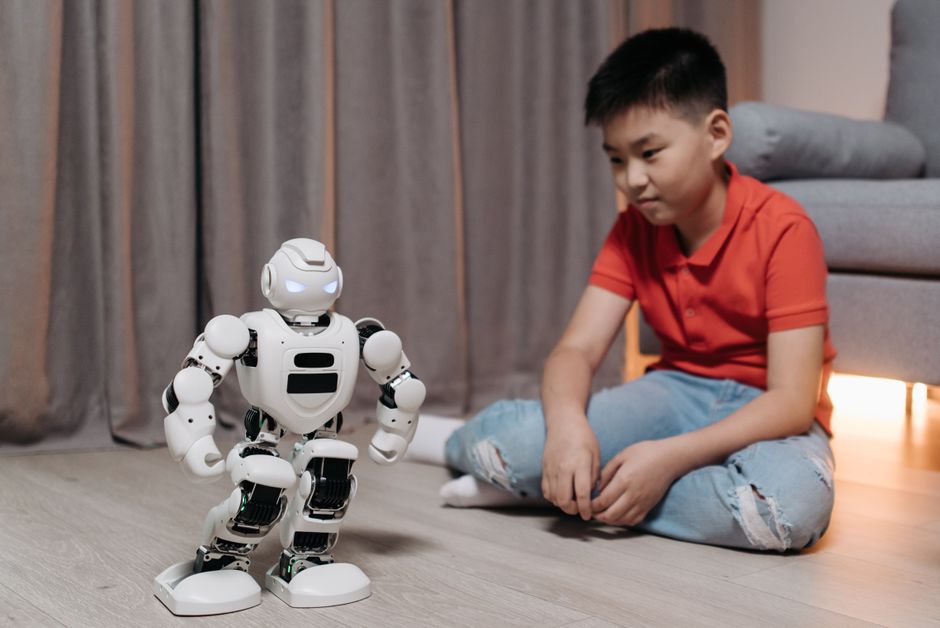
Consider prompt engineering as a concrete illustration. A well-constructed prompt is not simply a matter of typing instructions. It requires the user to define an objective with precision, anticipate how a language model will interpret ambiguous phrasing, and refine iteratively based on what returns. A nurse using AI to draft patient education materials, for example, must understand both the clinical context and the model’s tendencies well enough to catch oversimplifications or inaccuracies. That is not a technical skill — it is applied domain knowledge combined with disciplined critical thinking.
For those looking to take the next step, Heal your past, design your future is a resource worth exploring.
For those looking to take the next step, Become an Ultimate Master of your life is a resource worth exploring.
A Strategic Learning Path for Students Entering the Workforce
Students face a particular temptation: to accumulate credentials in whichever AI tool dominates current job postings. A more resilient approach builds the underlying capacities that make any tool more powerful regardless of what the market favors in a given year. An architecture student who understands spatial reasoning and client communication will apply AI design tools more effectively than one who only knows the software shortcuts.

- Train yourself to verify claims independently — AI systems produce confident-sounding errors with alarming regularity, and fact-checking is a non-negotiable skill.
- Practice decomposing complex challenges into discrete, manageable components before introducing any AI assistance.
- Develop precision in written and verbal communication, since effective prompt construction is an extension of clear thinking.
- Pursue breadth across disciplines — an AI output interpreted through multiple professional lenses is almost always more useful than one evaluated through a single perspective.
How Established Professionals Must Adapt Their Approach
For those already deep in their careers, the risk is different but equally real. Accumulated expertise is genuinely valuable — the danger is treating it as sufficient insulation against disruption. The professionals who will maintain relevance are those who integrate AI into existing workflows while preserving the critical distance necessary to identify errors, surface hidden assumptions, and contribute the human context that no model can independently generate.
Reskilling in this context does not mean starting over. It means extending existing strengths into new territory. A supply chain manager who understands how an AI demand forecasting tool weights historical data is positioned to challenge its outputs intelligently — a colleague who simply forwards the report without scrutiny is not. A communications director who uses AI to generate first drafts but rewrites them with brand voice and stakeholder awareness in mind will consistently outperform one who publishes unedited outputs.
- Map your current workflows and identify where AI reduces administrative friction versus where human judgment must remain the primary driver.
- Invest in understanding the mechanics behind the tools in your field, not just their surface-level functions.
- Treat every AI output as a starting point requiring verification, refinement, and contextual adjustment.
- Participate in professional communities where AI applications in your specific field are actively debated — those conversations frequently outpace formal training curricula.
Why Human Emotional Intelligence Remains Non-Negotiable
Technical and cognitive skills dominate most AI readiness conversations, but emotional intelligence warrants equal attention. AI systems can analyze sentiment, generate responses calibrated to emotional tone, and simulate empathy in language. What they cannot do is genuinely register the weight of a difficult conversation, perceive the unspoken tension in a negotiation, or build the relational trust that sustains long-term professional partnerships.
A therapist, a team leader navigating conflict, or a sales professional managing a fragile client relationship all operate in territory where human emotional attunement is the primary value being delivered. AI can support the administrative and analytical dimensions of those roles, but the irreplaceable core remains distinctly human. Professionals who invest in deepening their interpersonal capabilities — active listening, empathetic communication, reading nonverbal cues — are developing competencies that AI advancement will not erode.
- Interpersonal trust is built through consistency, presence, and genuine understanding — none of which AI can authentically replicate.
- Emotional attunement in leadership and client-facing roles is a durable differentiator in an increasingly automated environment.
- Teams led by emotionally intelligent managers demonstrate stronger cohesion and adaptability during periods of technological transition.
Redefining What It Means to Be AI-Ready
True AI readiness is not a certification or a platform proficiency score. It is the combination of analytical rigor, domain expertise, interpersonal depth, and the disciplined habit of treating machine output as raw material rather than finished product. Students who build these foundations will find that every AI tool they encounter becomes more powerful in their hands. Professionals who layer these capabilities onto existing expertise will discover that their value increases rather than diminishes as automation expands.
The individuals who will define success in an AI-integrated economy are not necessarily those who adopted the tools earliest — they are those who learned to think alongside those tools most effectively. That distinction is worth building your entire learning strategy around.


 UACE UNEB SAMPLE PAPERS 2026Advanced Secondary
  ADVANCED LEVEL BIOLOGY, NEW CURRICULUM, SENIOR FIVEAdvanced Secondary,Biology
  Command Your Timeline: Heal the Past, Design Your FutureIntelligence,Skills Development
  SHAPTA MOCKS 2024
 Ultimate Me: Unlock Your Ultimate Potential & Energy HealingIntelligence,Skills Development
 What is ChatGPT?General
 Elderberry: The Wildcrafted Herb That Fights Illness NaturallyGeneral
 Elderberry: The Wildcrafted Herb That Heals NaturallyGeneral
 Friday Shutdown Routine That Replaced My Sunday Reset for GoodGeneral
 Turmeric: The Golden Herb That Heals From the Inside OutGeneral
 Turmeric: The Golden Herb That Heals From the Inside OutGeneral
 Best Free AI Voice Tools Available Right Now in 2025General
 Minecraft Quests & Ugandan Curriculum: Learn Through GamingGeneral
- Uganda Schools on the Brink: The Human Cost of Aid Cuts 2026General
 CapCut AI Ad Test: Is It Fast or Just Flashy?General
 Turmeric: The Golden Herb That Heals From the Inside OutGeneral
 KAKURU BENARDSample Activity of Integration on Forests, Forest resources and Forestry in Africa
- KAKURU BENARDSample Activity of Integration on Trade within and outside East Africa
 Babirye SandraO-LEVEL ENTREPRENUERSHIP,PETTY CASHBOOK ASSIGNMENT
- Babirye SandraO-LEVEL ENTREPRENUERSHIP,PETTY CASHBOOK ASSIGNMENT
- Babirye SandraO-LEVEL ENTREPRENUERSHIP,PETTY CASHBOOK ASSIGNMENT
0 responses on "The Real AI Skills Gap: What Students and Pros Must Know Now"